SEO title: iPhone 6 Price in Nigeria 2026: Buy or Skip?
Meta description: iPhone 6 price in Nigeria 2026 — what UK-used models cost, whether it still works in 2026, iOS support status and what to buy instead.
The iPhone 6 was released in September 2014. It was the phone that made Nigeria take Apple seriously — the first iPhone with a screen large enough for a market that had already fallen in love with Samsung’s bigger displays. In 2026, the iPhone 6 is twelve years old. It runs an operating system that stopped receiving updates four years ago. Its 8-megapixel camera produces photos that look like they were taken through fog compared to anything modern. And it is still one of the most-searched iPhones in Nigeria.
Why? Because the iPhone 6 sits at a price point that makes it feel accessible. Under ₦70,000 for a recognisable Apple product with a working Touch ID, a functional camera, and the weight and feel of a premium device — that is a real proposition for budget-conscious Nigerian buyers. The question this guide answers honestly is: is that a good deal, or is it a trap?
Looking for a current-generation iPhone? The iPhone 16 starts at ₦1,184,500 at Kara with manufacturer warranty, USB-C, Apple Intelligence, 48MP camera and full iOS 18 support. Read our complete iPhone 16 price guide for all storage options and colours.
Table of Contents
iPhone 6 Price in Nigeria — June 2026
The iPhone 6 has not been manufactured since 2016. Every unit available in Nigeria is either UK-used (imported pre-owned from Europe or North America), fairly used (locally pre-owned), or refurbished. There is no legitimate source for a factory-sealed, brand-new iPhone 6 anywhere in the world — if someone is selling one as “new in box,” they are selling a resealed device.
Here is what the current Nigerian market charges:
| Model | Storage | Market Price (₦) | Condition Notes |
|---|---|---|---|
| iPhone 6 | 16GB | ₦25,000 – ₦45,000 | UK-used; limited storage |
| iPhone 6 | 32GB | ₦30,000 – ₦55,000 | UK-used; most common variant |
| iPhone 6 | 64GB | ₦40,000 – ₦70,000 | UK-used; Grade A scarce |
| iPhone 6 | 128GB | ₦50,000 – ₦85,000 | UK-used; rare, price varies widely |
| iPhone 6 Plus | 16GB–128GB | ₦35,000 – ₦90,000 | Larger screen; same generation |
These prices reflect current UK-used market rates in Lagos and Abuja as of June 2026. The 16GB model is the most common but also the most frustrating to use — 16GB of storage in 2026 fills up after installing WhatsApp, a banking app, and taking a few dozen photos. The 64GB and 128GB models carry a premium precisely because they are scarcer and more usable.
Kara does not stock the iPhone 6 — it is a legacy device that falls outside our current product range. These are open-market prices to help you make an informed comparison. For an in-depth look at why iPhone prices shift in Nigeria, read our analysis of how the exchange rate affects iPhone and tech prices in Nigeria.
We have previously covered the iPhone 6 and 6 Plus as a vintage device still sought after in Nigeria, and our iPhone 6 usability guide for 2026 covers what the phone can and cannot do in detail. This post focuses specifically on price, value and whether the money is better spent elsewhere.
What the iPhone 6 Still Does in 2026
Honesty first: the iPhone 6 is not useless in 2026. There are things it still does competently, and acknowledging them matters before listing the limitations.
It makes calls, sends texts and runs WhatsApp (for now)
The core phone functions work exactly as they always did. WhatsApp currently supports iOS 12 — which is the iPhone 6’s maximum iOS version — so the app runs. However, WhatsApp has historically dropped support for older iOS versions with 12–18 months of notice. When WhatsApp drops iOS 12, the iPhone 6 loses its most important Nigerian app. This is not a question of if but when.
The build quality holds up
Aluminium body, solid construction, comfortable in the hand at 129g. A well-maintained iPhone 6 in 2026 feels physically better than many budget Android phones at the same price. The 4.7-inch screen is small by 2026 standards, but that also makes it pocketable in a way that modern 6.1-inch and 6.7-inch phones are not.
Touch ID works
First-generation Touch ID is slower than modern Face ID, but it unlocks the phone reliably. For users who prefer fingerprint authentication over face recognition, the iPhone 6 delivers.
The Serious Limitations You Must Know Before Buying
This is the section that determines whether your ₦25,000–₦85,000 is well spent or wasted. The limitations of the iPhone 6 in 2026 are not minor inconveniences — they affect what you can actually do with the phone every day.
iOS support ended in 2020 — and the consequences are real
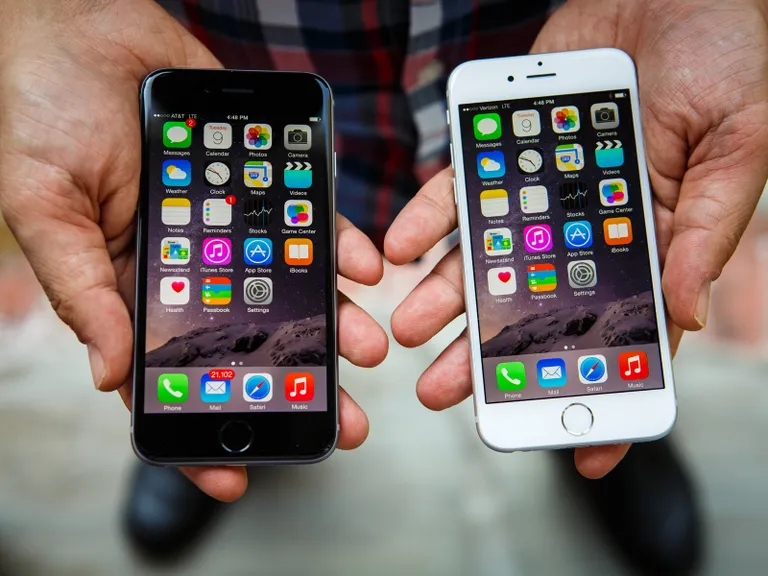
The iPhone 6 maxes out at iOS 12.5.7. It cannot run iOS 13, 14, 15, 16, 17, or 18. In practical terms:
- No security patches since 2020 — every known vulnerability is permanently exploitable
- No Apple Intelligence features (requires iOS 18 and A17+ chip)
- Increasing app incompatibility — many apps now require iOS 15 or higher
- Nigerian banking apps are migrating to iOS 15+ minimums — GTBank, Access, FirstBank may drop iOS 12 within 12 months
- No iCloud updates, no new emoji, no new privacy features
Our iOS 26 support guide shows exactly which iPhones still receive updates. The iPhone 6 has been in the “obsolete” category for six years.
The battery situation is critical
Every iPhone 6 on the market is at least 10 years old. The original 1,810 mAh battery was small even in 2014. After a decade of charge cycles:
- Original battery life: 3–4 hours of active screen-on time
- Typical 2026 battery life: 1.5–2.5 hours of active use
- Worst case: Under 1.5 hours — the phone dies before lunch
A battery replacement costs ₦28,000–₦45,000 at a Nigerian service centre. That is worth doing if you are committed to using the phone, but it adds to the total cost of ownership. Read our complete iPhone battery replacement guide for older iPhones and our guide on how to avoid iPhone battery replacement errors before paying anyone to do the work.
The A8 chip is genuinely slow in 2026
The A8 processor was released in 2014 — it is now five chip generations behind even the iPhone X, and ten generations behind the iPhone 16. In practical terms: apps take 4–8 seconds to open, the camera takes 2–3 seconds to launch, scrolling in Chrome stutters on media-heavy pages, and switching between apps frequently causes background apps to close entirely and reload from scratch. For a phone that runs WhatsApp and makes calls, it is tolerable. For anything more, it is frustrating.
The 8MP camera is a genuine weak point
No Night Mode, no Portrait Mode, no HDR worth using, no optical image stabilisation (only on the 6 Plus). Photos taken on the iPhone 6 in 2026 look noticeably worse than photos from any phone made after 2018, including budget Android devices under ₦50,000. If you use your phone camera for anything beyond the most casual snapshots, this is a deal-breaker.
16GB storage is essentially unusable
The most common iPhone 6 variant in Nigeria is the 16GB model. iOS 12 itself occupies approximately 5–6GB. WhatsApp with a year of media takes another 3–5GB. That leaves 5–8GB for everything else: photos, banking apps, music. You will be managing storage constantly and deleting things to make room. If you buy an iPhone 6, pay the premium for the 64GB or 128GB version. The best iPhone storage management tips from iOS 26 covers strategies that work for limited storage.
iPhone 6 vs iPhone 8 vs iPhone 11 vs iPhone 16: The Full Picture
This table shows exactly what each step up from the iPhone 6 gives you, and at what price. The point is not to make the iPhone 6 look bad — it is to show you what your alternatives look like at each budget level.
| Feature | iPhone 6 | iPhone 8 | iPhone 11 | iPhone 16 |
|---|---|---|---|---|
| Chip | A8 | A11 Bionic | A13 Bionic | A18 |
| Camera | 8MP single | 12MP single | 12MP dual | 48MP dual |
| Display | 4.7″ LCD | 4.7″ LCD | 6.1″ LCD | 6.1″ OLED |
| Battery (real) | 2–3 hrs | 3–4 hrs | 6–8 hrs | 8–10 hrs |
| iOS support | iOS 12 max | iOS 16 max | iOS 18+ | iOS 18+ |
| Security | Touch ID | Touch ID | Face ID | Face ID |
| Connector | Lightning | Lightning | Lightning | USB-C |
| 5G | No (4G only) | No | No | Yes |
| Nigeria price | ₦25k–₦85k | ₦50k–₦120k | ₦150k–₦250k | From ₦1.18m |
The critical insight: the iPhone 8 at ₦50,000–₦120,000 gives you Touch ID, a vastly faster A11 chip, a better 12MP camera, wireless charging, and iOS 16 support — for only ₦25,000–₦50,000 more than the iPhone 6. Read our iPhone 8 and 8 Plus price guide for Nigeria and our review of whether the iPhone 8 is still fit for WhatsApp and calls in 2026 for the full assessment.
If your budget reaches ₦150,000–₦250,000, the iPhone 11 is a transformatively better phone — Face ID, Night Mode camera, all-day battery, and iOS 18 support. Read our iPhone 11 price guide for Nigeria and our comparison of the iPhone 11, 11 Pro and 11 Pro Max for detailed Nigerian market pricing.
Who Should — and Should Not — Buy an iPhone 6 in 2026
The iPhone 6 might still make sense for:
- A phone for basic calls and WhatsApp only. If the phone will live in a drawer and be used purely for calls and WhatsApp — and you accept that WhatsApp will likely drop iOS 12 support within 12–18 months — the iPhone 6 serves this purpose at minimal cost.
- A temporary device while saving for something better. If you need a working phone for three to six months while your budget builds toward an iPhone 11 or 16, the iPhone 6 fills the gap.
- A collector or nostalgia purchase. Some buyers want the iPhone 6 specifically because of what it represents. That is a valid reason — and our post on why the iPhone 6 is still sought after as a vintage device explores this in depth.
The iPhone 6 does not make sense for:
- Your primary daily smartphone. The battery dies mid-morning, apps take seconds to load, the camera produces 2014-quality photos, and iOS 12 is a security liability. No amount of nostalgia compensates for this in daily use.
- Anyone who relies on mobile banking. Nigerian banking apps are progressively requiring iOS 15 or higher. The iPhone 6 on iOS 12 is already locked out of some banking apps and will lose more within the next year.
- Students or professionals. The limited storage, slow processor and dying battery make the iPhone 6 a frustrating tool for any productive work. A ₦50,000–₦120,000 iPhone 8 is a dramatically better option for school or professional use.
- Content creators or social media users. The 8MP camera and lack of Portrait Mode, Night Mode or any modern computational photography makes the iPhone 6 inadequate for Instagram, TikTok or any visual content creation.
If the iPhone 6 doesn’t fit your needs: the iPhone 16 at Kara starts at ₦1,184,500 with manufacturer warranty, Apple Intelligence, a 48MP camera, and software support through 2031+. If that’s above budget, read our iPhone X price guide (₦80k–₦180k) or iPhone 7 Plus guide for alternatives between the iPhone 6 and current gen.
If You Are Buying: How to Check a Used iPhone 6 in Nigeria
If you have decided the iPhone 6 is the right purchase for your situation, these checks take five minutes and can save you from a dead phone within weeks.
1. Check battery health
The iPhone 6 running iOS 12 does not show battery health in Settings the way newer iPhones do. Instead, download a third-party app (coconutBattery on Mac, or 3uTools on Windows) to check the battery cycle count and remaining capacity. If remaining capacity is below 70%, budget ₦8,000–₦15,000 for a battery replacement.
2. Verify the storage size before paying
Go to Settings → General → About → look for “Capacity.” Confirm the storage matches what the seller is advertising. The 16GB, 32GB, 64GB and 128GB models look identical from the outside — the only way to verify is in the software. Do not take the seller’s word for it.
3. Check for iCloud Activation Lock
If the previous owner did not sign out of their Apple ID, the phone is permanently locked to their account. Go to Settings → look at the top. If a name and Apple ID email appear that are not yours — the phone is locked. Do not buy it. This cannot be bypassed without the original owner’s cooperation.
4. Test Touch ID
Go to Settings → Touch ID & Passcode → Add Fingerprint. If the sensor does not respond or registers unreliably, the home button assembly is failing. Replacement costs ₦12,000–₦25,000 — which is potentially half the cost of the phone itself.
5. Inspect the charging port
The Lightning port on a 10-year-old phone has endured thousands of plug-unplug cycles. Plug in a Lightning cable. If it wobbles, disconnects intermittently, or does not charge at all, the port needs repair (₦5,000–₦10,000). Combined with a battery replacement, the repair costs begin to approach the phone’s resale value.
For the full pre-purchase inspection framework, read our UK-used iPhone buyer’s protection guide for Nigeria 2026 — every check in that guide applies to the iPhone 6.
The Upgrade Path: Better Options at Every Budget
The strongest argument against buying an iPhone 6 in 2026 is not that it is bad — it is that the alternatives are so close in price and so much better. Here is the upgrade ladder from the iPhone 6:
Step 1: iPhone 7 or 7 Plus (₦40,000–₦100,000 UK-used)
The minimum meaningful upgrade. Faster A10 chip, better 12MP camera, stereo speakers, water resistance (IP67), and — on the 7 Plus — a dual camera with Portrait Mode. The price overlap with the iPhone 6 is significant, which makes the 7 the objectively better buy at similar money. Our iPhone 7 Plus price and value guide for Nigeria has the full breakdown, and our iPhone 7 vs iPhone 8 battery comparison helps if battery life is your priority.
Step 2: iPhone 8 (₦50,000–₦120,000 UK-used)
The sweet spot for budget Nigerian iPhone buyers who want meaningful improvement without reaching iPhone X territory. The A11 Bionic chip is vastly faster than the A8, the 12MP camera is significantly better, wireless charging arrives, and iOS 16 support means another 1–2 years of app compatibility. Read our comprehensive iPhone 8 Plus buyer’s guide for Nigeria and our iPhone 8 vs iPhone XR cost-of-maintenance comparison to see the full picture.
Step 3: iPhone X or XR (₦80,000–₦200,000 UK-used)
The generational leap. Face ID replaces Touch ID, the screen becomes OLED edge-to-edge (or the larger 6.1-inch LCD on the XR), and the camera takes a noticeable step forward. The XR in particular offers iOS 18 support at a price that sometimes overlaps with the iPhone X. Our iPhone X price guide for Nigeria 2026 and iPhone XR price guide cover both options in full.
Step 4: iPhone 11 (₦150,000–₦250,000 UK-used)
The best-value used iPhone in Nigeria in 2026. Night Mode, ultra-wide camera, all-day battery, Face ID, iOS 18 support, and A13 Bionic that still feels fast. The price gap from the iPhone 6 is real — but so is the quality gap. For most Nigerian buyers, saving another ₦100,000 to reach the iPhone 11 instead of buying an iPhone 6 is the smarter financial decision. Read the iPhone 11 price guide for Nigeria.
Step 5: iPhone 16 (from ₦1,184,500 new at Kara)
The full reset. A phone that will last five to six years with guaranteed software support, a 48MP camera, Apple Intelligence, USB-C, and a manufacturer warranty. The total cost of ownership over five years is actually lower than buying three consecutive used iPhones over the same period. See iPhone 16 prices and options at Kara.
Ready to move to current generation? Shop iPhones at Kara → · iPhone 16 from ₦1,184,500 · Manufacturer warranty · Same-day Lagos delivery · Browse all phones
Frequently Asked Questions
How much is iPhone 6 in Nigeria right now?
The iPhone 6 costs between ₦25,000 and ₦85,000 in Nigeria as of June 2026, depending on storage capacity (16GB to 128GB), condition grade, and battery health. All available units are UK-used or locally pre-owned. The iPhone 6 Plus costs slightly more, ranging from ₦35,000 to ₦90,000.
Is iPhone 6 still usable in 2026?
For basic calls and WhatsApp, yes — with caveats. The iPhone 6 runs iOS 12, which is no longer supported. WhatsApp currently works but will likely drop iOS 12 support within 12–18 months. Banking apps are already requiring iOS 15+. For detailed usability assessment, read our iPhone 6 usability guide for Nigeria 2026.
What is the latest iOS the iPhone 6 can run?
iOS 12.5.7 is the maximum. It was released in January 2023 and is the final update the iPhone 6 will ever receive. There will be no further security patches, feature updates, or compatibility improvements.
Should I buy an iPhone 6 or save for an iPhone 11?
Save for the iPhone 11 if you can. The iPhone 11 at ₦150,000–₦250,000 (UK-used) gives you iOS 18 support, a dramatically better camera, Face ID, Night Mode, and a battery that lasts a full day. The iPhone 6 at ₦25,000–₦85,000 is cheaper upfront but offers declining functionality and a 12–18 month window before key apps stop working.
Is the iPhone 6 Plus worth the extra money over the iPhone 6?
Only if you specifically want the larger 5.5-inch screen. The 6 Plus has optical image stabilisation (the standard 6 does not) and a slightly larger battery, but both models share the same A8 chip, same iOS 12 limitation, and same declining app compatibility. The price premium of ₦10,000–₦20,000 for the Plus buys you screen size, not capability.
What phone should I buy instead of iPhone 6 in Nigeria?
At the same budget (₦30,000–₦80,000): the iPhone 7 or iPhone 8 are substantially better. At ₦100,000–₦200,000: the iPhone X or XR. At ₦150,000–₦250,000: the iPhone 11 (the best-value used iPhone available). For a new phone with warranty: the iPhone 16 at Kara starting at ₦1,184,500.
Where can I sell my old iPhone 6 in Nigeria?
Jiji, Facebook Marketplace, and Computer Village (Ikeja) are the primary resale channels. Price your iPhone 6 realistically at ₦15,000–₦40,000 depending on storage and condition. Use the resale value toward upgrading to a newer model.
The Bottom Line
The iPhone 6 costs ₦25,000–₦85,000 in Nigeria in June 2026. At that price, it is the cheapest way to own a real iPhone with Touch ID and Apple’s build quality. But it is also a twelve-year-old phone stuck on iOS 12, with a battery measured in hours not days, a camera that cannot compete with any modern phone, and a software support clock that has already expired.
If your budget is truly under ₦50,000, the iPhone 6 works as a temporary or secondary device. Check the battery, verify the storage, confirm there is no iCloud lock, and accept that its useful lifespan is measured in months, not years.
If your budget can reach ₦50,000–₦120,000, buy the iPhone 8 instead. Better in every measurable way for a small price premium. Read the iPhone 8 buyer’s guide.
If your budget can reach ₦150,000+, the iPhone 11 changes the conversation entirely. And if you are buying a phone to last, the iPhone 16 at Kara is the investment that costs less per year of useful life than any used iPhone on this page.
Shop current-generation iPhones at Kara → · iPhone 16 from ₦1,184,500 · Manufacturer warranty · Same-day Lagos delivery · All phones
More From the Kara Blog
- iPhone 6 and 6 Plus in Nigeria: why this vintage device is still sought after
- iPhone 6 in 2026: is it still usable? Buyer’s guide for Nigeria
- iPhone 7 Plus in Nigeria 2026: price guide and value review
- iPhone 8 and 8 Plus price in Nigeria: how much for what value
- iPhone 8 review in 2026: still fit for WhatsApp and calls?
- iPhone X price in Nigeria 2026: market rate and honest verdict
- iPhone XR price guide: getting the best deal at Kara
- iPhone 11 price in Nigeria: UK-used guide
- How much is iPhone 16 in Nigeria? Complete 2026 price guide
- UK-used iPhone buyer’s protection guide Nigeria 2026
- Complete iPhone battery replacement guide for older iPhones
- iOS 26 support guide: which iPhones are obsolete in 2026
- Most popular iPhones in Nigerian UK-used phone market