SEO title: iPhone 11 Pro Price in Nigeria 2026
Meta description: iPhone 11 Pro price in Nigeria today — what the market is charging, whether UK-used is worth it, and why some buyers still choose it over newer budget models.
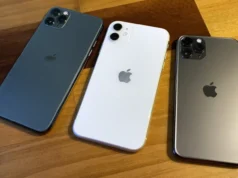
Apple’s Pro line started here. The iPhone 11 Pro, released in 2019, was the first iPhone to carry the “Pro” name — and it earned it. Triple camera system. OLED display. Night Mode across all three lenses. A stainless-steel frame instead of aluminum. At launch, it was the best camera phone Apple had ever made.
In 2026, the iPhone 11 Pro occupies a compelling position in Nigeria’s used-phone market. It runs iOS 18. Its OLED display still looks better than the LCD screens on the iPhone 11 and iPhone XR at similar prices. Its 2× telephoto lens — unique in this price tier — does something no phone under ₦200,000 in Nigeria can match: it gives you genuine optical zoom. And it costs ₦180,000–₦250,000 for the 64GB in the current Nigerian used market.
The 11 Pro is not without trade-offs — the battery is smaller than that of the standard iPhone 11, and its OLED can develop burn-in on older units. This guide covers the current market price, what you get for it, and the one key decision: is the Pro worth the premium over the standard iPhone 11, or should that money go toward the iPhone 12 instead? The full iPhone 11 family comparison is in our iPhone 11, 11 Pro and 11 Pro Max value guide. This post focuses specifically on the 11 Pro.
Looking for a new iPhone with warranty? iPhone 16 from ₦1,184,500 at Kara → · Factory sealed · Apple manufacturer warranty · Same-day Lagos delivery
Table of Contents
How Much Is iPhone 11 Pro in Nigeria? — June 2026
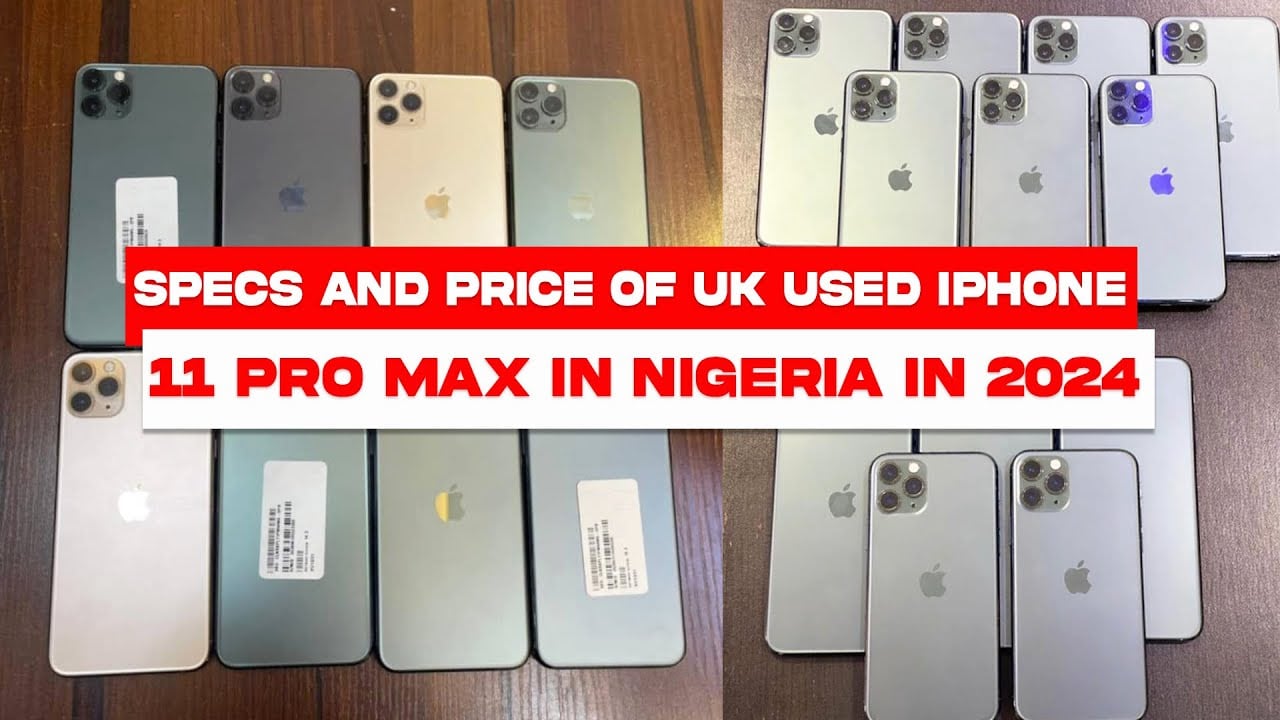
Every iPhone 11 Pro in circulation is UK-used or locally pre-owned. These prices reflect the current Lagos and Abuja market as of June 2026:
| Model | Storage | Market Price (₦) | Condition |
|---|---|---|---|
| iPhone 11 Pro | 64GB | ₦180,000 – ₦250,000 | UK-used Grade A–B |
| iPhone 11 Pro | 256GB | ₦230,000 – ₦320,000 | UK-used Grade A–B |
| iPhone 11 Pro | 512GB | ₦280,000 – ₦380,000 | UK-used Grade A; scarce |
The 64GB is the most common variant and the entry point. The 256GB is the better everyday choice: 64GB fills uncomfortably fast when iOS 18, WhatsApp media, and a growing photo library compete for space. The 512GB commands a premium and is genuinely rare at Grade A condition — if you find one below ₦300,000 from a verifiable seller, inspect it thoroughly before assuming it’s authentic.
iPhone 11 Pro vs iPhone 11: What the Extra Money Buys
The iPhone 11 standard costs roughly ₦30,000–50,000 less than the 11 Pro at comparable storage. That gap is the question. Here is exactly what it buys you:
| Feature | iPhone 11 | iPhone 11 Pro |
|---|---|---|
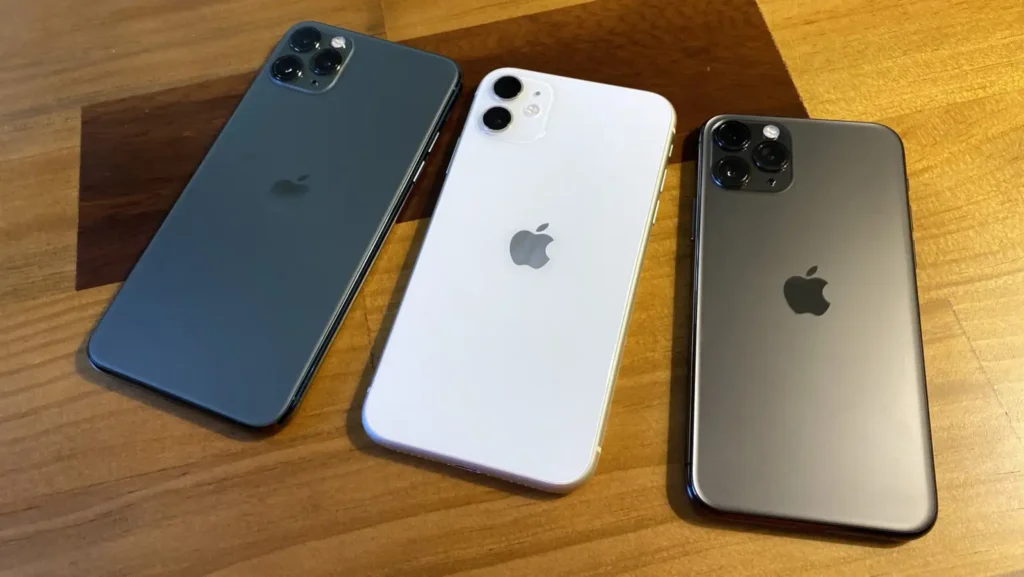
| Display | 6.1″ LCD (Liquid Retina) | 5.8″ OLED (Super Retina XDR) |
| Rear cameras | Wide + Ultrawide (no telephoto) | Wide + Ultrawide + 2× Telephoto |
| Zoom | Digital zoom only | 2× optical zoom |
| Night Mode | Main lens only | All three lenses |
| Battery (real use) | 6–8 hours | 5–7 hours (smaller battery) |
| Frame | Aluminium | Surgical stainless steel |
| Nigeria price (64GB) | ₦150,000–₦200,000 | ₦180,000–₦250,000 |
The three differences that matter most in Nigerian daily use: OLED display, 2× telephoto, and Night Mode on all three lenses. The standard iPhone 11’s LCD screen is good — bright and accurate — but once you have used an OLED panel, the difference in contrast and black depth is immediately visible. The telephoto is the more consequential advantage: it is the only way to get genuine optical zoom on any iPhone in this price tier. If either of those specifications matters for how you use your phone, the Pro premium is justified. If your photography is mainly WhatsApp and social media and you mostly use the main lens, the standard iPhone 11 is the smarter purchase.
Our iPhone 11 price guide for Nigeria covers the standard model in full detail, including the Grade A market rates and what to look for in the used market.
What the iPhone 11 Pro Still Does Well in 2026
The triple camera system — still the headline feature
The 12MP wide, 12MP ultrawide, and 12MP 2× telephoto combination gives the iPhone 11 Pro a creative range that the standard iPhone 11 and every iPhone below it in the price ladder cannot match. The telephoto produces optically zoomed portraits with genuine background compression — a quality difference you can see on a mobile screen, not just in a side-by-side pixel comparison. Night Mode on all three lenses means usable low-light photography across focal lengths. For event photography, portrait work, food content, and product photography, the triple system is the reason to choose the 11 Pro over everything cheaper.
Super Retina XDR OLED — the display difference
At 5.8 inches with 458 pixels per inch, the iPhone 11 Pro’s display is smaller than the standard 11 but noticeably sharper. More importantly, it is OLED: true blacks, infinite contrast ratio, and HDR content that looks correct rather than washed out. For anyone who spends significant screen time on video, photography, or reading, the OLED quality remains a genuine daily advantage in 2026.
iOS 18 support — the critical platform floor
Like the iPhone XR and the iPhone 11 series, the 11 Pro runs iOS 18. This means current WhatsApp updates, full Nigerian banking app compatibility, Apple Intelligence core features, and ongoing security patches. Our iOS 26 support guide shows the full picture of which models remain supported. The 11 Pro’s iOS 18 compatibility is what separates it from the iPhone X and iPhone 8, which have lost security patches and are progressively losing app support.
Stainless steel build — premium in the hand
The surgical stainless steel frame gives the 11 Pro a weight and rigidity that aluminium-framed phones at the same price tier do not replicate. A well-maintained 11 Pro in 2026 still feels more premium than most phones twice its current market price. The frosted glass back — unique to the Pro models — resists fingerprints better than the glossy back of the standard iPhone 11 and adds to the sense of considered material quality.
The Limitations Worth Knowing
Battery: smaller than the standard iPhone 11
The 11 Pro’s 3,046 mAh battery is smaller than the standard iPhone 11’s 3,110 mAh — and meaningfully smaller than the 11 Pro Max’s 3,969 mAh. In Nigerian daily conditions, expect 5–7 hours of moderate screen-on time. Given that every 11 Pro in circulation has now been in use for 5–6 years, battery health is the single most important thing to check before purchasing. If the battery health reads below 80%, budget ₦15,000–25,000 for a replacement. The complete iPhone battery replacement guide for Nigeria covers service centres, costs, and what to watch for.
OLED burn-in on heavily used units
OLED displays are susceptible to image retention (burn-in) when static elements — keyboard bars, navigation icons, status indicators — remain on screen for extended periods. On well-maintained units, this is not an issue. On phones used at high brightness for extended periods each day, the keyboard ghost and navigation bar shadow may be visible on light-colored backgrounds. Test the display before buying: open a plain grey or mid-tone image and look for faint residual patterns at the bottom and top of the screen.
5.8 inches may feel small for some users
The 11 Pro’s 5.8-inch screen is one of the smaller iPhone displays available in 2026. Users coming from an iPhone 11 (6.1″), iPhone XR (6.1″), or any current-generation model will notice the reduction in screen real estate. The 11 Pro Max — covered separately with its 6.5-inch display — is the answer if screen size is a priority alongside the Pro camera system.
Buying an iPhone 11 Pro in Nigeria: Five Checks
At ₦180,000–₦380,000, these checks take five minutes and eliminate the most common buying mistakes:
- Battery health: Settings → Battery → Battery Health. Must read 80%+ to justify the purchase price without negotiating for a discount.
- OLED burn-in test: Open a plain grey image on full brightness. Any visible keyboard ghost or navigation shadow at screen edges indicates burn-in.
- Triple camera test: Open the camera and switch between all three lenses. Each should focus and photograph without lag or error. The telephoto — the Pro’s premium feature — must work cleanly.
- Serial number: Settings → General → About. Verify at checkcoverage.apple.com. Confirms purchase date, warranty status, and lost/stolen report.
- iCloud lock: Settings — if a name appears at the top that the seller cannot remove, the phone is locked. Walk away.
The full verification framework — IMEI checks, Lightning port inspection, and speaker testing — is in our UK-used iPhone buyer’s protection guide for Nigeria.
Should You Buy the iPhone 11 Pro in 2026? The Verdict
The iPhone 11 Pro is the right purchase at this price tier if: your primary motivation is the triple camera with optical zoom, you value the OLED display over the standard 11’s larger LCD, and your budget sits between ₦180,000 and ₦320,000.
If your budget is under ₦180,000, the iPhone XR — which we reviewed recently in our XR price guide — gives you Face ID and iOS 18 for less, with the caveat of a single camera and LCD display.
If your budget can reach ₦300,000–₦380,000, the iPhone 12 Pro brings 5G, MagSafe, a LiDAR scanner, and a meaningfully improved camera system — making it worth considering seriously before committing to the 11 Pro at the upper end of its price range.
Frequently Asked Questions
How much is iPhone 11 Pro in Nigeria?
The iPhone 11 Pro costs ₦180,000–₦250,000 for the 64GB and ₦230,000–₦320,000 for the 256GB in the Nigerian used market as of June 2026. All available units are UK-used or locally pre-owned.
Is iPhone 11 Pro still worth buying in 2026?
Yes, specifically if the triple camera and OLED display justify the premium over the standard iPhone 11. The 11 Pro runs iOS 18, receives security patches, and its telephoto lens is unique in its price tier. Verify battery health and OLED condition before purchasing.
Does iPhone 11 Pro run iOS 18?
Yes. The iPhone 11 Pro runs iOS 18 — Apple’s current operating system — and receives ongoing security updates. This distinguishes it from the iPhone X (iOS 16 maximum) and iPhone 8 (iOS 16 maximum), which have lost security patch support.
What is the difference between iPhone 11 and iPhone 11 Pro?
The 11 Pro has an OLED display (vs LCD on the standard 11), a 2× telephoto lens (the standard 11 has no telephoto), Night Mode across all three cameras, a surgical stainless steel frame (vs aluminium), and a smaller 5.8-inch screen (vs 6.1-inch). It costs approximately ₦30,000–50,000 more at comparable storage.
Should I buy iPhone 11 Pro or iPhone 16?
If budget allows, the iPhone 16 at ₦1,184,500 (128GB) at Kara is a fundamentally different class of purchase — 48MP camera, A18 chip, USB-C, Apple Intelligence, and manufacturer warranty with software support through 2031. The iPhone 11 Pro at ₦180,000–₦250,000 is a legitimate purchase for buyers whose budget does not reach the iPhone 16, with the understanding it has 2–3 more years of useful life.
The Bottom Line
The iPhone 11 Pro costs ₦180,000–₦380,000 in Nigeria’s used market in June 2026, depending on storage and condition. At the lower end of that range, it is one of the best-value purchases in the Nigerian used iPhone market: triple camera with optical zoom, OLED display, iOS 18 support, and a stainless steel build that still feels premium.
The 256GB at ₦230,000–₦320,000 is the sweet spot. It gives you meaningful storage headroom, the full triple camera experience, and a phone that will remain functional on iOS updates for 2–3 more years with normal use.
Check battery health before paying — it is the 11 Pro’s most variable condition factor. Inspect the OLED for burn-in. Verify the serial number. And if the asking price approaches ₦320,000+, open the conversation about the iPhone 12 Pro before committing: the additional spend may buy you a generational leap.
Shop iPhones at Kara with full manufacturer warranty → · iPhone 16 from ₦1,184,500 · Factory sealed · Same-day Lagos delivery