Apple has always made design compromises in the name of thinness. Every millimetre removed from an iPhone’s profile has historically come at a cost — a smaller battery, fewer cameras, less thermal headroom. The iPhone 17 Air takes that design philosophy further than any iPhone ever has: at 5.5mm thin, it is the slimmest phone Apple has ever made. But the engineering choices required to achieve that number are ones you need to understand before deciding whether the Air is the right iPhone for you.
Here is what makes the Air genuinely remarkable: Apple put the A19 Pro chip — the same processor found in the ₦3,330,000 iPhone 17 Pro Max — inside a phone that is expected to cost roughly half that price. Twelve gigabytes of RAM. A 120Hz ProMotion display. The full Apple Intelligence feature set. In a body thinner than most Nigerians have held a smartphone.
And here is what Apple sacrificed to get there: a 3,149 mAh battery — the smallest in the iPhone 17 family — and a single rear camera instead of the dual-lens system on the standard iPhone 17. In a country where power is unreliable and the camera is the most-used app on most phones, those two trade-offs are not minor footnotes. They are the central question of this review.
Check current stock: iPhone 17 Air at Kara → · Factory sealed · Apple manufacturer warranty · Same-day Lagos delivery
Table of Contents
How Much Is iPhone 17 Air in Nigeria?
Kara does not yet list a standalone confirmed price for the iPhone 17 Air at time of writing. The estimates below are derived from the confirmed iPhone 17 standard price of ₦1,530,000 (256GB) at Kara, the market-observed premium for the Air across Nigerian retailers in June 2026, and proportional storage uplift from the iPhone 17 Pro Max structure. All figures are clearly labelled as estimates.
| Model | Storage | Est. Price at Kara (₦) | Check Price |
|---|---|---|---|
| iPhone 17 Air | 256GB | ~₦1,880,000–₦1,950,000 | Live price at Kara → |
| iPhone 17 Air | 512GB | ~₦2,350,000–₦2,450,000 | Live price at Kara → |
| iPhone 17 Air | 1TB | ~₦2,750,000–₦2,900,000 | Live price at Kara → |
All prices above are estimates. The only confirmed Kara iPhone 17 price is the standard model at ₦1,530,000 (256GB). Check the iPhone 17 price page on Kara for the confirmed Air price before purchasing.
The Air sits between the standard iPhone 17 and the Pro models in the lineup. For context: Nigerian market sources suggest the Air commands a ₦300,000–₦400,000 premium over the standard iPhone 17 at comparable storage — driven by the premium titanium construction, larger display, and the Pro-grade chip inside an ultra-thin chassis. Our analysis of how the exchange rate affects iPhone prices in Nigeria explains why the gap between confirmed prices and market estimates can shift quickly.
Where the iPhone 17 Air Sits in the Lineup
The Air replaces the “Plus” model that Apple had in the iPhone 15 and 16 generations. Where the Plus was simply a larger-screened version of the standard model, the Air is a fundamentally different design philosophy. Understanding where it sits helps you decide whether it is the right choice:
| Feature | iPhone 17 | iPhone 17 Air | iPhone 17 Pro Max |
|---|---|---|---|
| Chip | A19 | A19 Pro ★ | A19 Pro |
| Display | 6.1″ 60Hz | 6.5″ 120Hz ProMotion ★ | 6.9″ 120Hz ProMotion |
| Rear camera | 48MP main + 48MP UW | Single 48MP main only ⚠️ | 48MP main + 48MP UW + 48MP 5× tele |
| Battery | ~3,600 mAh | 3,149 mAh ⚠️ | 4,832 mAh |
| Thickness | ~7.8mm | 5.5mm — thinnest iPhone ever ★ | ~8.2mm |
| MagSafe | 25W | 20W | 30W |
| RAM | 8GB | 12GB ★ | 12GB |
| Price est. (256GB) | ₦1,530,000 | ~₦1,880,000–1,950,000 | ₦3,330,000 |
★ = the Air’s surprising advantages over the standard iPhone 17. The Air carries the A19 Pro chip (not the base A19) and 12GB RAM — giving it performance headroom that the standard iPhone 17 does not have. It is the only non-Pro iPhone to include these specifications. ⚠️ = the meaningful trade-offs: a single camera and a smaller battery than the standard 17.
5.5mm: What the Thinnest iPhone Ever Actually Feels Like
The numbers do not fully convey it. A 5.5mm device is thinner than a standard AAA battery. It is 2.3mm thinner than the iPhone 17 Pro Max. When you pick up the Air for the first time, the immediate reaction from almost every person who has tried it is not about the screen or the camera — it is about the physical sensation of holding something this thin while knowing it is an iPhone.
The engineering required to achieve 5.5mm is significant. Apple uses an aerospace-grade titanium alloy — the same family as the Pro models — which allows a thin frame to maintain structural rigidity without flex. The display goes to the edge of the device to maximise screen real estate without adding width. Internal components are stacked differently from any previous iPhone design.
The practical benefits for Nigerian users: the Air slips into the pocket of a fitted shirt without a visible bulge. It lies flat under a laptop when carried in a bag. In meetings, it does not create the subtle table displacement that larger flagship phones do. For professionals who want their phone to be present but unobtrusive, the thinness is a functional advantage, not just a spec.
Battery: The Honest Nigerian Assessment
This is the section that will determine whether the iPhone 17 Air is the right phone for you. Read it completely before deciding.
The 3,149 mAh battery is the smallest in the iPhone 17 family. Apple rates the Air at up to 22 hours of video playback. In controlled laboratory conditions, that figure is achievable. In Nigerian daily conditions — background WhatsApp syncing across multiple groups, banking app notifications, mobile data on when Wi-Fi is unavailable, ambient temperature of 30–35°C — the real picture is different:
- Light use (calls, WhatsApp, occasional browsing, light camera use): 8–10 hours screen-on time. Will last a working day for light users with discipline around background apps.
- Moderate use (WhatsApp across multiple groups, Instagram, Maps, banking apps, camera throughout): 5–7 hours screen-on time. Will need a charge mid-afternoon for most Nigerian professional users.
- Heavy use (continuous video, hotspot sharing, gaming, ProRes recording): 3–4.5 hours. Needs a power source available nearby.
Compare this to the standard iPhone 17’s ~3,600 mAh battery which delivers 7–9 hours of moderate Nigerian use. The Air gives you roughly 1.5–2 hours less daily endurance than the standard model. For Nigerians who charge opportunistically — plugging in whenever NEPA is available, keeping a power bank in the bag — this is manageable. For users who need absolute battery confidence across a full day without access to charging, the Air is not the right choice.
The MagSafe charging caps at 20W on the Air, compared to 25W on the standard iPhone 17 and 30W on the Pro Max. This means the Air takes slightly longer to top up from the same charger. We have written separately about whether wireless charging is worth it for Nigerian iPhone users — the Air’s smaller battery means MagSafe top-ups are faster to reach meaningful percentages, which partially compensates for the slower max wattage.
The NEPA test: If your daily routine involves 6+ hours away from a socket without a power bank, the Air requires careful power management. For users who always carry a 20W USB-C power bank, this concern is manageable. For everyone else, the standard iPhone 17 or the Pro models deliver more endurance.
Camera: What a Single Lens Gives You in 2026
The iPhone 17 Air has one rear camera. Not two, not three — one. This is the other significant trade-off, and it is worth understanding what that means in practice before dismissing or accepting it.
What the single 48MP Fusion camera does exceptionally well
The 48MP main sensor in the Air is the same Fusion camera found in the standard iPhone 17 — which is itself a generation ahead of the iPhone 16 in computational photography. Night Mode, Smart HDR, Photographic Styles, Action Button shutter control: all present. For portraits, food photography, casual street shots, product photographs, and the everyday social media content that represents 80–90% of Nigerian smartphone camera use, the 48MP single camera is outstanding. No compromise there.
Center Stage — Apple’s AI framing technology — is included in the front camera, which means Zoom calls, FaceTime, and video recording automatically keep you centred in the frame as you move. For Nigerian professionals whose video call quality matters professionally, this is a genuine functional upgrade over fixed-frame front cameras.
What you lose without the ultrawide
The standard iPhone 17 has a 48MP ultrawide camera in addition to the main lens. The Air does not. In practical terms: no wide group shots that fit everyone in a small room, no expansive landscape or architectural photography, no macro close-ups. Wide-angle photography — which accounts for a meaningful portion of creative iPhone use — requires physically moving further from the subject. For users who frequently shoot in tight spaces (offices, events, interiors) or need architectural photography for real estate or design work, the absence of the ultrawide is felt regularly.
No telephoto means no zoom beyond digital
The Air has no optical zoom lens. Beyond the main camera’s native focal length, zoom is digital — which means quality degrades as you zoom. The standard iPhone 17 also lacks a dedicated telephoto (that is a Pro-only feature), so this is not an Air-specific limitation. But it is worth noting that buyers coming from an iPhone Pro expecting telephoto capability will not find it here.
The honest camera verdict: the Air’s single camera is genuinely excellent for most daily photography. The limitation is not quality — it is versatility. Users who shoot primarily portraits and documentation will not miss the ultrawide. Users who rely on the wide angle for creative, architectural, or group photography will.
The A19 Pro Chip: Why This Is the Air’s Hidden Advantage
This is the specification that surprises most people who read the Air’s spec sheet carefully. Apple put the A19 Pro — the same chip inside the ₦3,330,000 iPhone 17 Pro Max — into the iPhone 17 Air. Not the base A19 found in the standard iPhone 17. This was almost certainly an engineering decision driven by the vapor chamber cooling Apple wanted to avoid duplicating in a thinner chassis: the A19 Pro’s efficiency on second-generation 3nm silicon generates less heat than a chip optimised for performance over efficiency would.
The practical consequence: the Air runs Apple Intelligence — all of it, including the most demanding on-device processing — with the same headroom as the Pro Max. Writing Tools, Photo Clean Up, Priority Notifications, Siri with ChatGPT integration: all run from the same silicon as the most expensive iPhone in the lineup. With 12GB of RAM (not the 8GB in the standard iPhone 17), the Air handles Apple Intelligence under multitasking more smoothly than the standard model. This is a meaningful difference if you use Apple Intelligence heavily in your professional workflow.
For context on which Apple Intelligence features work on Nigerian Apple IDs and which require a US region setting, read our iOS 26 support guide.
Who Should Buy the iPhone 17 Air — and Who Should Not
The Air is the right choice for:
- Professionals for whom physical presence matters. Executives, lawyers, consultants who want a premium iPhone that is genuinely unobtrusive in a suit pocket or slim bag. The Air is a statement that prioritises elegance over maximalism.
- Light-to-moderate smartphone users. If your daily use is calls, WhatsApp, email, and occasional social media, the battery is adequate and the single camera covers your needs comfortably.
- Buyers upgrading from iPhone 14 or older who want a meaningful camera jump without Pro pricing. The 48MP Fusion + A19 Pro combination is a significant leap from any iPhone 14 or earlier camera system.
- Users who always carry a power bank. In Nigeria, a 10,000mAh USB-C power bank effectively removes the battery anxiety. If this describes you, the Air’s battery limitation is neutralised.
The Air is probably not the right choice for:
- Heavy phone users who need all-day battery without anxiety. The standard iPhone 17 at ₦1,530,000 gives you roughly 1.5–2 more hours of daily endurance.
- Content creators and videographers who need multiple focal lengths. The absence of the ultrawide limits creative versatility. The iPhone 17 Pro Max is the professional camera tool for serious creators.
- Buyers who primarily want the lowest price in the iPhone 17 family. The standard iPhone 17 is cheaper and has better battery and dual cameras. The Air premium buys you thinness, the A19 Pro chip, and the larger 120Hz display.
Not sure whether to buy the Air or the standard iPhone 17? Read our full iPhone 17 review for Nigeria to compare both models. For buyers considering the Pro Max, our iPhone 17 Pro Max review covers that decision.
iPhone 17 Air Colours Available in Nigeria
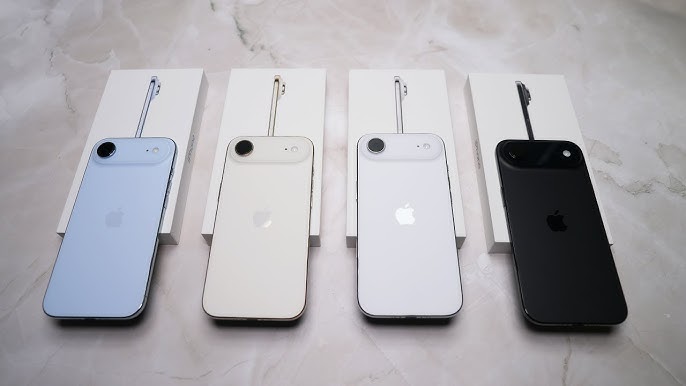
The iPhone 17 Air is available in multiple colours. Confirmed options in the Nigerian market include Sky Blue, Black, and White. Additional colours may be available — check the live Kara iPhone 17 listing for current stock per colour and storage combination. The titanium frame takes on a different quality to the aluminium of previous Air/Plus models — it catches light in a way that makes the device look more premium than its slim profile suggests.
Colour availability varies by storage tier and can change with each import batch. Sky Blue has been the most distinctive option — a muted, sophisticated tone that photographs well and works across professional and casual contexts. Black remains the default choice for users who prefer their phone to disappear into the background.
Before You Buy: What to Verify
The full pre-purchase checklist for the iPhone 17 Air is covered in our existing guide: 7 essential checks before buying an iPhone 17 Air in Nigeria. The three most important points:
Serial number verification
Settings → General → About → Serial Number. Verify at checkcoverage.apple.com before paying. The Air’s thinness makes it appealing to counterfeiters — verification is non-negotiable at this price point.
Confirm the manufacturer warranty
At Kara, every iPhone ships factory sealed with an Apple manufacturer warranty. If a seller offers only a personal warranty or reseller warranty, negotiate accordingly or choose a verified dealer. Recent iOS 26.3 security patches arrived immediately on authorised devices — a genuine manufacturer warranty ensures you receive these patches without delay.
Check the box for USB-C
The iPhone 17 Air ships with a USB-C cable. A Lightning cable in the box is an immediate counterfeit signal. The box lid should fit tightly with no micro-gaps at the corners.
Shop iPhone 17 Air at Kara → · Factory sealed · Apple warranty · Same-day Lagos delivery
Frequently Asked Questions
How much is iPhone 17 Air in Nigeria?
The iPhone 17 Air 256GB is estimated at ₦1,880,000–₦1,950,000 at Kara based on market data and the confirmed standard iPhone 17 pricing. Check the live Kara listing for the confirmed current price before purchasing.
Is iPhone 17 Air worth buying in Nigeria?
Yes — if you prioritise thinness, a large 120Hz display, and pro-grade processing (A19 Pro chip + 12GB RAM) over battery endurance and camera versatility. If battery life is your primary concern, the standard iPhone 17 at ₦1,530,000 delivers more endurance for less money. If you are a photographer or creator who needs an ultrawide or telephoto, the iPhone 17 Pro Max is the professional tool.
What is the difference between iPhone 17 and iPhone 17 Air?
The Air has a larger display (6.5″ vs 6.1″), 120Hz ProMotion (vs 60Hz on standard 17), the A19 Pro chip (vs base A19), 12GB RAM (vs 8GB), thinner design (5.5mm vs ~7.8mm), and costs roughly ₦350,000–₦420,000 more. The standard iPhone 17 has better battery (3,600+ mAh vs 3,149 mAh) and a dual camera system (main + ultrawide) vs the Air’s single camera. Read the full iPhone 17 standard review for the complete comparison.
Does iPhone 17 Air have a good battery life for Nigeria?
Moderate use in Nigerian conditions delivers approximately 5–7 hours of screen-on time. Heavy users will need a charge mid-afternoon. Light users can make it through a working day with discipline. The 3,149 mAh battery is the Air’s significant trade-off for thinness. A 20W USB-C power bank carried daily effectively addresses this concern.
What colours is iPhone 17 Air available in Nigeria?
Sky Blue, Black, and White are confirmed options in the Nigerian market. Additional colours may be available. Check the Kara iPhone 17 listing for current per-colour stock.
Does the iPhone 17 Air have a good camera?
Yes — for most daily photography. The single 48MP Fusion camera with A19 Pro computational photography is excellent for portraits, documentation, food, social media, and product photography. The limitation is versatility: no ultrawide lens means no wide-angle shots without moving further from the subject. The camera comparison table in the review above shows where the Air sits relative to other iPhone 17 models.
Is iPhone 17 Air available to buy in Nigeria now?
Yes. The iPhone 17 Air is available at Kara. Check current stock and confirmed pricing here.
The Bottom Line
The iPhone 17 Air is a phone built around a single conviction: that thinness, done properly with premium materials and without compromise on chip performance, is a legitimate reason to make a purchase decision. At 5.5mm, carrying the A19 Pro chip, a 6.5-inch 120Hz display, and 12GB of RAM, it largely delivers on that conviction.
The two trade-offs are real and worth naming directly. The 3,149 mAh battery requires Nigerian users to be more intentional about charging than any other iPhone 17 model. The single camera delivers quality but not versatility. If either of those limitations conflicts with how you actually use your phone daily, the Air is not the right choice for you.
If they do not — if you carry a power bank, if your camera use is primarily portraits and documentation rather than creative wide-angle work — the iPhone 17 Air offers a combination of design, chip performance, and display quality that exists in no other phone at its price point. At roughly ₦1,880,000–₦1,950,000 for the 256GB, it sits between the standard iPhone 17 at ₦1,530,000 and the iPhone 17 Pro Max at ₦3,330,000 — a genuinely distinct proposition rather than a compromise.
Shop iPhone 17 Air at Kara → · Sky Blue · Black · White · 256GB to 1TB · Factory sealed · Apple warranty
More From the Kara Blog
- iPhone 17 Air in Nigeria: 7 essential checks before buying
- iPhone 17 review for Nigeria 2026: the iPhone that solves Nigeria’s biggest problem
- iPhone 17 Pro Max review Nigeria 2026: the most powerful iPhone Apple has ever made
- How much is iPhone 16 in Nigeria? Complete 2026 price guide
- iPhone 16 Pro Max price in Nigeria 2026: every storage, every colour
- iPhone 17 Pro Max price in Nigeria: best deals and where to buy
- Buy iPhone 16 or iPhone 17 in Nigeria — the iOS 26 guide
- How the iPhone 16 is driving demand for the iPhone 17
- Exchange rate effect on iPhone 17 prices in Nigeria
- Wireless charging on iPhones: luxury or necessity for Nigerian users?
- iOS 26 support guide: which iPhones are still receiving updates
- Security alert: critical iPhone vulnerabilities fixed in iOS 26.3
- UK-used iPhone buyer’s protection guide Nigeria 2026
- Best iPhone storage management tips — iOS 26 edition