A server room that loses power in Lagos is not experiencing a technical inconvenience. It is experiencing simultaneous transaction corruption, service outage, equipment stress from abrupt shutdown, and — if the event repeats — accelerated hardware failure across every connected device. In a city where PHCN supply averages four to twelve hours of grid power daily depending on location, and where voltage sags and surges arrive between outages as a constant background condition, the UPS protecting a Nigerian data centre or server room is not backup infrastructure. It is primary infrastructure. Every minute the servers are running, the UPS is working.
Yet the UPS is the component that most Nigerian IT managers under-specify, defer, or procure by price alone — without accounting for the technical criteria that determine whether the system actually protects the infrastructure it is supposed to protect. This guide covers what those criteria are, what the buying decision looks like for Lagos-specific conditions, and what the correct specifications are for different server room scales.
Table of Contents
What Is the Difference Between a UPS and an Inverter for a Server Room or Data Centre?
An inverter and a UPS are not the same system, and using an inverter where a UPS is specified will damage or destroy the equipment it is supposed to protect. This distinction matters in Nigeria because home inverter systems are common and many IT managers assume they provide equivalent server protection. They do not.
| UPS (Uninterruptible Power Supply) | Home Inverter System | |
| Transfer time | 0–4 milliseconds (zero for online UPS) | 20–500 milliseconds |
| Output waveform | Pure sine wave (line-interactive and online) | Modified sine wave (most models) |
| Voltage regulation | Built-in AVR corrects continuously | None — passes grid voltage as-is |
| Server compatibility | Full compatibility — APFC power supplies safe | Modified sine wave can damage APFC PSUs |
| Primary design purpose | IT infrastructure, servers, networking | Home appliances, lighting, fans |
| Correct for server room? | Yes | No |
The transfer time is the critical number. A server requires power continuity within 4–20 milliseconds of a grid failure to remain operational without crashing. Most home inverter systems take 20–500ms to switch — during which the server experiences a complete power loss, triggers an emergency shutdown or crash, and potentially corrupts active data. A properly specified UPS eliminates this window entirely.
How Do I Choose the Right UPS for a Server Room or Data Centre in Nigeria?
Five criteria determine the correct UPS specification for a Nigerian server room. Procuring by price alone without addressing all five is the most common cause of UPS underperformance in Lagos IT deployments.
1. Topology — Online, Line-Interactive, or Standby?
Topology determines how the UPS operates during normal conditions, not just during outages — and this is where the Lagos grid conditions make the specification choice critical.
- Online double-conversion: Equipment is powered continuously through the UPS inverter. The grid charges the battery; the inverter powers the load. When the grid fails, nothing switches — zero transfer time. The correct specification for any server room handling production workloads, financial transactions, or continuous recording systems. For Nigerian conditions with daily PHCN events, this is also the only topology that completely isolates the equipment from grid-borne voltage disturbances.
- Line-interactive with AVR: The UPS monitors incoming voltage and corrects sags and surges using its AVR transformer without switching to battery. It switches to battery only on complete outage, with a 2–4 millisecond transfer time. Appropriate for SME server rooms where loads are not mission-critical and where a brief transfer time is acceptable.
- Standby (offline): Sits idle until the grid drops, then switches to battery with a 4–20 millisecond transfer time. Not recommended for servers with APFC power supplies. Acceptable for basic office equipment but incorrect for any server room application.
For any Lagos server room running production workloads: online double-conversion is the correct specification. The additional cost over line-interactive is recovered in the first prevented server crash.
2. Capacity — How Much kVA Does Your Server Room Require?
Calculate total connected load in watts, then apply two adjustments:
- Add 25–30% headroom: For startup current spikes when PHCN power is restored and all equipment reinitialises simultaneously — a peak load that is significantly higher than steady-state operation.
- Check power factor: A UPS with 0.8 power factor at 10kVA delivers 8kW of usable power. A unity power factor (1.0) system delivers 10kW at 10kVA. For modern high-density server environments, unity PF systems deliver 25% more usable power from the same VA rating.
A practical example for a Lagos medium server room: 4 rack servers at 350W each = 1,400W. Core switch at 200W. Firewall at 100W. Storage at 150W. Total = 1,850W. Add 30% headroom = 2,405W. Minimum UPS specification: 3kVA (delivering 2,700W at 0.9 PF) or 3kVA unity PF for full rated output.
3. Battery Runtime — How Long Does Your Generator Take to Start?
Nigerian server rooms running on generator backup need UPS battery runtime that covers the generator start and ATS transfer window — typically 3–15 minutes depending on the generator system and site configuration. For sites with manual generator start, add the human response time: a realistic figure for a Lagos office is 8–20 minutes from power cut to stable generator supply. The UPS battery must bridge this entire window. For critical deployments, external battery packs extend runtime to 30–90 minutes without replacing the core UPS unit.
4. Input Voltage Range — How Well Does It Handle Nigerian Grid Conditions?
Nigerian mains voltage fluctuates from below 160V during demand peaks to above 260V on restoration surges. A UPS with a narrow input voltage range (e.g., 200–240V) will switch to battery constantly under Lagos grid conditions, rapidly degrading battery life. Specify a UPS with a wide input range of 160–280V minimum — the AVR operating range that covers Nigerian grid fluctuations without battery switching. Online double-conversion UPS systems are inherently less sensitive to input voltage range because the rectifier operates across a wider tolerance. Line-interactive systems depend critically on their AVR range for battery life longevity in Nigerian conditions.
5. Output Waveform — Pure Sine Wave Is Non-Negotiable for Servers
Every server manufactured after 2010 uses Active Power Factor Correction (APFC) in its power supply. APFC power supplies require pure sine wave input when operating from battery. Modified or simulated sine wave output — the waveform that most standby and some budget line-interactive UPS systems provide — causes APFC power supplies to draw excess current, generate excess heat, operate erratically, and fail prematurely. For a server room, pure sine wave output on battery is not a premium feature. It is a basic compatibility requirement.
What UPS Capacity Does a Nigerian Data Centre or Server Room Need?
| Server Room Scale | Typical Load | Recommended UPS | Topology |
| Home office / SOHO server | 500W–1.5kW | 2kVA line-interactive | Line-interactive with AVR |
| SME server room (2–4 servers) | 1.5kW–4kW | 3kVA–6kVA online | Online double-conversion |
| Medium corporate server room (4–10 servers) | 4kW–12kW | 6kVA–15kVA online | Online double-conversion |
| Large server room / small data centre | 12kW–50kW | 15kVA–60kVA online | Online double-conversion |
| Enterprise data centre section | 50kW–200kW+ | 60kVA–400kW industrial online | Online double-conversion (three-phase) |
These figures assume 70–80% UPS utilisation at steady state — the operating range that maximises battery longevity and provides headroom for load spikes. Running a UPS consistently above 85% of rated capacity in Nigerian ambient temperatures accelerates battery degradation and increases the risk of overload during startup current peaks.
Which UPS Brands Are Used in Nigerian Data Centres and Server Rooms?
The Nigerian enterprise UPS market operates across three tiers. The correct tier for a given deployment depends on load scale, vendor compliance requirements, and capital budget — not brand preference.
Premium Tier — APC (Schneider Electric) and Liebert (Vertiv)
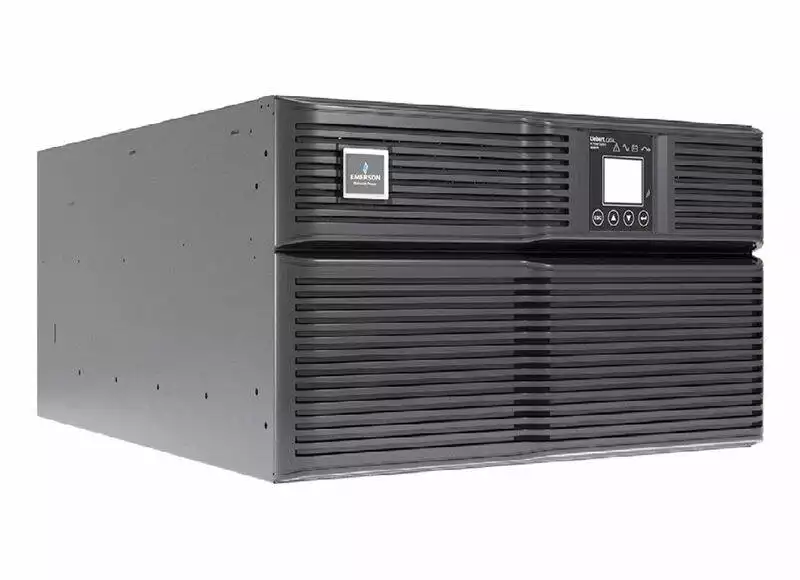
APC and Liebert are the two dominant global data centre UPS brands, with full Nigerian distributor networks and enterprise service infrastructure. APC’s Smart-UPS SRT range covers 1kVA through 10kVA for IT rooms; the APC Easy UPS 3S covers 10kVA through 40kVA in three-phase configuration. Liebert’s GXT5 range covers 3kVA through 10kVA in rack-mount online configuration for co-location and enterprise data centres. For organisations with procurement policies specifying APC or Vertiv, or with existing investment in APC PowerChute or Vertiv management ecosystems, these are the correct specifications.
Industrial Tier — K-Star and Vectronic
K-Star and Vectronic are the industrial-grade online UPS brands most widely deployed in Nigerian data centres, telecoms infrastructure, and manufacturing facilities — at lower capital cost per kVA than APC or Liebert at equivalent capacity. K-Star covers 3kVA through 400kW; Vectronic covers 60kVA through 500kVA. For Nigerian deployments above 10kVA where brand compliance is not a procurement constraint, the K-Star and Vectronic range provides the most capital-efficient online protection. The K-Star 160kVA transformer-based unit provides galvanic isolation for medical and telecoms analogue loads — the specification that transformerless alternatives cannot provide.
Budget Industrial — Bluegate, Mercury, M-Power
For Nigerian SMEs and growing organisations requiring online protection at 3kVA–30kVA without premium brand pricing, Bluegate and Mercury supply HFI and LF online UPS systems at accessible capital costs. The HFI (High Frequency Inverter) units are appropriate for IT loads; the LF (transformer-based) units provide the isolation required for industrial and medical equipment. These brands have a strong Nigerian market presence and are available with standard delivery through Kara.com.ng. Browse: kara.com.ng/ups-systems
How Much Does a Server Room UPS Cost in Nigeria in 2026?
UPS price in Nigeria at the server room tier depends on three variables: capacity (kVA), topology (online vs line-interactive), and brand tier. The following ranges reflect the current Nigerian market as of 2026, across the capacity tiers most relevant to Lagos server room deployments:
| Capacity | Topology | Brand Tier | Price Range (Naira) |
| 1kVA–3kVA | Line-interactive | APC / Eastman | Price on application |
| 3kVA–6kVA | Online double-conversion | K-Star / Bluegate | Price on application |
| 6kVA–15kVA | Online double-conversion | APC SRT / Liebert GXT5 | Price on application |
| 15kVA–60kVA | Online double-conversion | K-Star / Vectronic | Price on application |
| 60kVA–200kVA | Online double-conversion | K-Star / Vectronic industrial | Price on application |
For confirmed Naira pricing on any specific capacity and brand, contact the Kara enterprise team. Pricing for B2B server room and data centre UPS systems is on application — quotes are typically returned within 24 hours and include delivery, basic installation scoping, and where relevant, load assessment support.
Should a Nigerian Server Room Use a UPS and Inverter Together, or One or the Other?
The correct configuration for most Lagos server rooms is a UPS plus a diesel generator — not a UPS plus a home inverter system. Understanding why requires understanding what each system is designed to do:
- UPS: Handles the critical bridge window — the time between grid failure and generator startup (typically 3–20 minutes in Nigerian conditions). Provides pure power conditioning and zero transfer time. Battery runtime is limited by design — UPS batteries are optimised for performance in short bursts, not extended operation.
- Diesel generator: Handles extended power outages — the hours-long NEPA cuts that characterise Lagos supply. A generator delivers sustained power at rated load without the battery degradation that occurs when a UPS battery bank is discharged repeatedly over long periods.
- Home inverter system: Optimised for home appliances on extended runtime. Modified sine wave output and slow transfer time make it incompatible with server infrastructure. A home inverter is not a substitute for a server room UPS at any price point.
The correct combination: Online double-conversion UPS for continuous clean power conditioning and zero-transfer-time protection, plus a diesel generator with automatic transfer switch for extended outage coverage. The UPS bridges the generator startup; the generator handles the duration. Both are required. Neither replaces the other.
Browse generators available at Kara: Voltage stabilizers for distribution protection:
Where Can I Buy a Server Room UPS in Lagos or Abuja with Installation Support?
Kara.com.ng has been supplying UPS systems to Nigerian enterprises, data centres, and server rooms from its Ikeja, Lagos base since 2012 — operating through 14+ years of Nigerian power infrastructure supply across the full range from 650VA home protection through 400kW industrial systems. The enterprise team handles load assessment, capacity sizing, and installation scoping for B2B buyers. All UPS systems are supplied with genuine manufacturer warranty. Lagos delivery is within 1–2 business days for in-stock units. Nationwide delivery to Abuja and all 36 states is 3–5 business days.
For server room and data centre UPS procurement in Nigeria:
- Browse the full UPS range — from entry standby through 400kW online industrial
- APC Smart-UPS and Smart-UPS SRT — Schneider Electric ecosystem, 750VA through 10kVA
- Liebert GXT5 / Vertiv — Vertiv ecosystem, rack-mount online, 3kVA through 10kVA
- K-Star industrial online UPS — 3kVA through 400kW, HFI and transformer-based options
- Vectronic 150kVA online UPS — industrial scale, three-phase
To make an enquiry or submit a quotation request, visit kara.com.ng/business. Our enterprise team responds within 24 hours
What Are the Best Practices for Server Room Power Design in Lagos?
Nigerian server room power infrastructure differs from the global template in one critical way: the grid cannot be treated as reliable input. International server room standards assume grid power is available and the UPS handles edge cases. In Lagos, the grid is an edge case — the UPS and generator are the reliable inputs. This inversion changes several design decisions:
- Size UPS for long generator changeover windows: International standard is 5–10 minutes UPS runtime. For Lagos, design for 15–20 minutes minimum — accounting for manual generator start, operator response time, and ATS transfer. For sites with automated ATS, 10 minutes is typically sufficient.
- Specify wide-range input voltage: 160V–280V minimum AVR range for all UPS systems. Nigerian grid voltage varies by more than ±15% — the standard spec that international UPS systems assume protects against — in both directions simultaneously in many locations.
- Install a stabilizer before the UPS: For server rooms taking power from a distribution board shared with heavy equipment (air conditioners, industrial machinery), a voltage stabilizer upstream of the UPS protects the UPS input stage from the severe voltage disturbances that motor loads generate. Browse stabilizers
- Implement N+1 redundancy for critical deployments: A single UPS failure at 2am should not take the server room down. For critical Nigerian infrastructure, parallel UPS systems (N+1) or modular UPS architecture (Liebert MPT) eliminate the single point of failure in the power electronics.
- Plan battery replacement cycles: In Nigerian ambient temperatures (30–40°C in an uncooled environment), sealed lead-acid UPS batteries degrade to 80% capacity in 2–3 years rather than the 4–5 year international standard. Budget for 3-year battery replacement cycles in Lagos server rooms and schedule maintenance before batteries fail rather than after.
What Questions Should I Ask Before Buying a Data Centre UPS in Nigeria?
Five questions that separate an appropriate UPS purchase from a misspecified one — and that any supplier should be able to answer clearly:
- What is the transfer time? For production servers: zero (online) or 2–4ms (line-interactive). Any answer above 10ms disqualifies the unit for server use.
- What is the output waveform on battery? Pure sine wave — mandatory for modern servers with APFC power supplies. Any unit specifying “modified” or “simulated” sine wave is not appropriate for server room use.
- What is the input voltage range for AVR operation? 160V–280V minimum. Nigerian grid conditions require this range for the AVR to correct without switching to battery.
- What is the power factor (output)? 0.9 or 1.0. Avoid systems with 0.7 or 0.8 PF unless the application warrants it — usable wattage per kVA is significantly lower at lower power factor.
- Does the supplier provide load assessment and installation support? A correctly sized UPS requires a load audit. Any supplier providing a quotation without understanding the connected load is specifying by approximation — which results in either an underspecified UPS that operates at overload or an overspecified system with capital wasted on unused capacity.
Ready to Specify a UPS for Your Lagos or Abuja Data Centre?
Kara.com.ng supplies the full spectrum of server room and data centre UPS systems to Nigerian enterprises — from the 3kVA APC Smart-UPS for a two-server SME room through K-Star and Vectronic industrial systems at 200kVA for full data centre sections. The Kara enterprise team provides load assessment, brand comparison, and quotation for B2B buyers without the overhead of the premium-brand reseller margin. Price on application for all enterprise UPS systems. Response within 24 hours.
Submit your server room specifications and load requirements at kara.com.ng/business. For a direct product comparison across the full UPS range.
Full UPS range | APC Smart-UPS | Liebert / Vertiv GXT5 | K-Star industrial | Vectronic 150kVA | Generators | Stabilizers | Enterprise enquiry