The Ultimate Guide to Choosing a Water Dispenser for Nigerian Offices and Homes starts with one simple truth: in Nigeria’s climate, constant access to clean, cool drinking water is not a luxury—it is a health necessity. From the intense heat of Lagos traffic to long hours spent in offices with limited ventilation, dehydration is a real, everyday risk. Yet choosing the right water dispenser in Nigeria goes far beyond picking the cheapest option online. Frequent power outages, fluctuating water quality, limited living or office space, and long-term running costs all play a critical role in making the right decision.
Table of Contents
Top Load vs Bottom Load Which Is More Hygienic for Nigerian Settings?
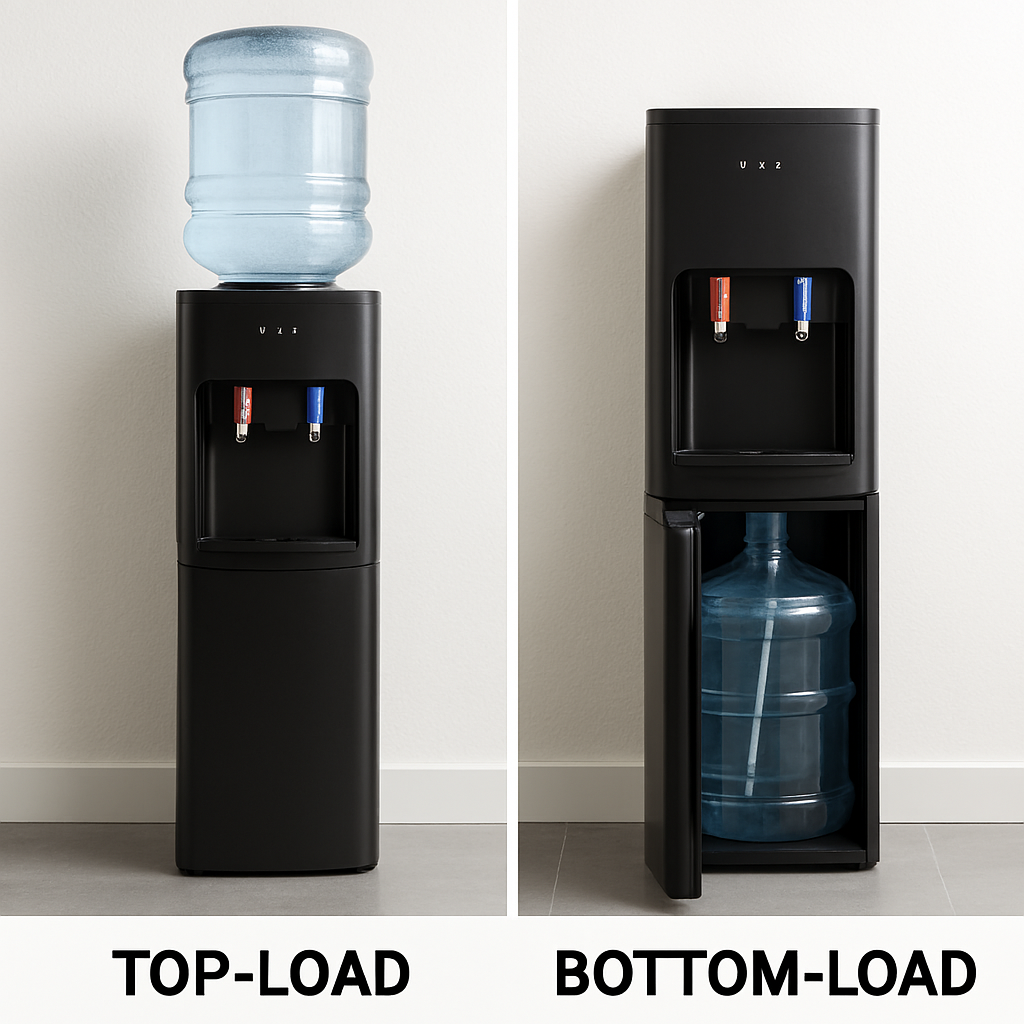
This is usually the first big decision Nigerians face when choosing a water dispenser.
Top Load Dispensers
Top load dispensers are the most common in Nigeria. You place the bottle upside down on top of the dispenser.
Pros
They are usually more affordable.
They are easy to find and repair.
Replacement parts are widely available.
They work well in offices where cost matters.
Cons
Lifting heavy bottles can be stressful, especially for women or older people.
Spillage can occur during bottle replacement.
The open top design can expose the water inlet to dust if not properly covered.
In Nigerian environments where dust is common, especially along major roads or construction areas, hygiene depends heavily on how clean the surrounding area is and how carefully bottles are handled.
Bottom Load Dispensers
Bottom load dispensers allow you to place the bottle inside a cabinet at the bottom, with no lifting required.
Pros
More hygienic because the water source is enclosed.
Easier to use for everyone.
Looks neater and more modern.
Less risk of spills.
Cons
More expensive.
Repairs can be slightly more technical.
Not all technicians are familiar with them.
The Power Consumption Reality. How Much Will This Add to Your NEPA Bill?
This is where many buyers get surprised. Water dispensers are always plugged in, which means they consume electricity continuously. In Nigeria, where electricity supply is inconsistent and generator or inverter usage is common, power consumption matters a lot.
What Consumes Power in a Dispenser?
Cooling system
Heating element for hot water
Standby power usage
A typical dispenser with both hot and cold functions can consume between 500 and 700 watts when actively heating or cooling.
What This Means for Nigerian Homes
If your dispenser is on 24 hours a day, it contributes to your NEPA bill more than you might expect.
During power outages, it draws from generators or inverters, increasing fuel or battery drain.
Smart Power Saving Tips
Choose energy efficient models with auto shut off.
Switch off the hot water function if you rarely use it.
Turn off the dispenser overnight in family homes.
Use cold only models for offices where hot water is not essential.
For Nigerians managing high electricity costs, these small decisions make a big difference over time.
Hot Water Function Is It Necessary for Nigerian Households
Many dispensers come with hot water taps, but do you really need it?
When Hot Water Is Useful
Making tea, coffee, or pap quickly.
Offices where staff frequently take hot beverages.
Homes with babies where warm water is sometimes needed.
When It Is Not Necessary
If you already have a kettle.
If you rarely drink hot beverages.
If you want to reduce electricity consumption.
In many Nigerian homes, the hot water function stays unused but still consumes power. For families focused on saving energy, a cold and normal water dispenser is often enough.
For offices, especially corporate or co working spaces, hot water is usually appreciated and worth having.
Maintenance Musts Preventing Scale and Bacterial Build Up in Our Water
This is one of the most overlooked aspects of owning a water dispenser in Nigeria.
The Nigerian Water Reality
Even bottled water can contain minerals.
Tap water varies widely across cities.
Hard water can cause scale buildup.
Warm temperatures encourage bacterial growth.
Common Problems
White scale forming inside the dispenser.
Strange taste in water.
Slow cooling or heating.
Health risks if not cleaned properly.
Essential Maintenance Practices
Clean the dispenser every three to four months.
Use vinegar or manufacturer approved cleaning solutions.
Always clean the water inlet and taps.
Do not expose the water opening to dust.
Replace bottles carefully with clean hands.
For offices, assign responsibility for maintenance. For homes, set a reminder. A clean dispenser protects your health and extends the life of the machine.
5 Recommended Water Dispenser Models for Lagos Offices
These recommendations focus on durability, hygiene, and efficiency for busy office environments.
1 Scanfrost Bottom Load Water Dispenser
Reliable cooling
Strong build quality
Suitable for high traffic offices
Good service support in Lagos
2 LG Bottom Load Water Dispenser
Excellent hygiene design
Energy efficient
Modern appearance for corporate spaces
3 Nexus Hot and Cold Water Dispenser
Affordable for growing offices
Good cooling performance
Easy to maintain
4 Hisense Water Dispenser with Cabinet
Strong cooling power
Internal storage space
Suitable for medium sized offices
5 Haier Thermocool Water Dispenser
Built for Nigerian conditions
Reliable parts availability
Good after sales support
These models are ideal for offices in areas like Ikeja, Victoria Island, Surulere, and Lekki where daily usage is high.
5 Recommended Water Dispenser Models for Family Homes
These focus on safety, energy efficiency, and ease of use.
1 Nexus Cold and Normal Water Dispenser
Low power consumption
Affordable
Perfect for small families
2 Scanfrost Top Load Dispenser
Durable
Easy to clean
Good for steady family use
3 Hisense Compact Water Dispenser
Space saving design
Suitable for apartments
Quiet operation
4 Haier Thermocool Home Series Dispenser
Reliable cooling
Energy conscious
Good warranty coverage
5 LG Home Water Dispenser
Premium build
Excellent hygiene features
Ideal for families prioritizing health
For homes in places like Ibadan, Abeokuta, Akure, or Abuja, these models balance comfort and cost effectively.
Ready to explore reliable water dispenser options built for Nigerian homes and offices? Take a look at trusted models available on Kara and choose one that fits your lifestyle and budget. Staying hydrated should be simple, safe, and stress free.