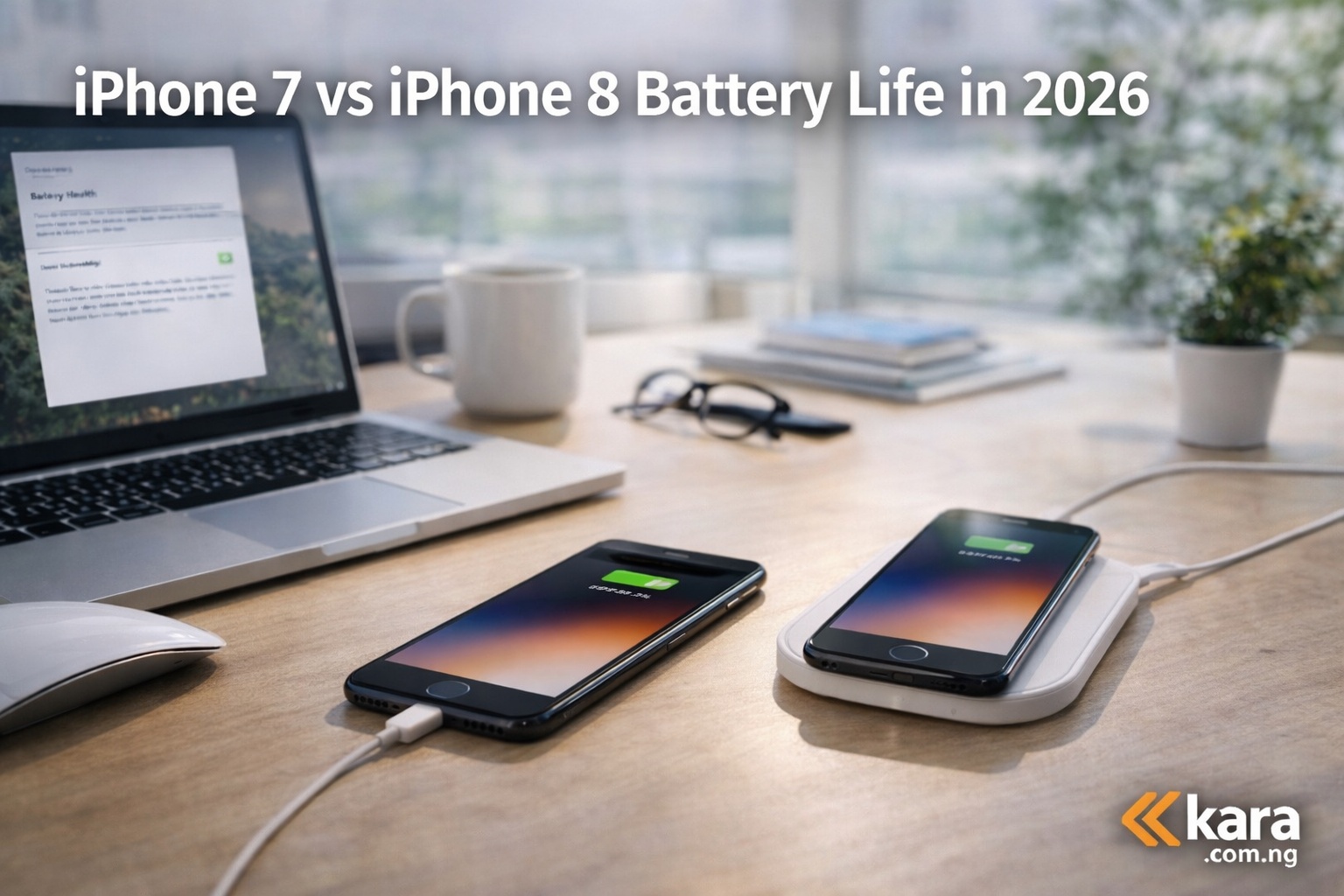
iPhone battery life comparison is a common debate among Nigerian buyers looking for an affordable used iPhone especially iPhone 7 and iphone 8 , both devices still appear in many listings across Nigeria, but battery performance is now one of the biggest deciding factors. This guide explains which phone lasts longer in real life use, what to expect in 2026, and which option makes more sense for buyers in Nigeria.
iPhone 7 vs iPhone 8: Which Is Better for Battery Life?
Older iPhones still have a strong presence in Nigeria’s smartphone market. Many people prefer them because they are cheaper than newer models but still offer the Apple experience.
Two models that buyers frequently compare are the iPhone 7 and the iPhone 8.
At first glance they look almost identical. However, battery performance, chip efficiency, and long-term usability can be very different today.
If your main concern is battery life, it is important to understand how both phones perform after years of use. Many Nigerians searching for iPhone 7 vs iPhone 8 battery performance comparison in Nigeria want to know which device will actually last through a typical day.
This guide breaks it down clearly.
iPhone 7 vs iPhone 8 battery life in 2026 overview
When comparing iPhone 7 vs iPhone 8 battery life in 2026, both phones come with relatively small batteries by modern standards.
Here is a quick overview.
| Feature | iPhone 7 | iPhone 8 |
| Battery capacity | 1960 mAh | 1821 mAh |
| Processor | A10 Fusion | A11 Bionic |
| Wireless charging | No | Yes |
| Power efficiency | Good | Better |
Although the iPhone 7 has a slightly larger battery, the iPhone 8 uses a more efficient processor.
This means the phone often manages power better during daily tasks.
Many buyers searching for which iPhone lasts longer between iPhone 7 and iPhone 8 discover that battery life depends more on efficiency than capacity.
Real world iPhone 7 vs iPhone 8 battery life
Real usage tells a clearer story than specifications.
For Nigerian users who spend time on WhatsApp, Instagram, YouTube, and browsing, battery performance matters a lot.
In daily usage tests, the iPhone 8 usually lasts slightly longer.
This happens because the A11 chip manages background tasks more efficiently.
Users researching real world iPhone 7 vs iPhone 8 battery test often notice the difference when streaming videos or using multiple apps.
Typical daily usage results:
• iPhone 7: around 4 to 5 hours screen time
• iPhone 8: around 5 to 6 hours screen time
This difference may seem small but it becomes noticeable during long days without charging.
iPhone 7 vs iPhone 8 battery health after many years
Another major factor is battery degradation.
Most iPhone 7 and iPhone 8 devices available in Nigeria today are used devices.
That means the battery health may already be reduced.
Buyers researching iPhone 7 vs iPhone 8 battery health after years of use should always check battery health before buying.
If battery health is below 80 percent, you will likely need a replacement soon.
Battery replacement costs are relatively affordable in Nigeria, but it still affects the overall value of the phone.
Charging speed and convenience comparison
Charging convenience also matters for many users.
One major advantage of the iPhone 8 is wireless charging.
When people search for does iPhone 8 battery last longer than iPhone 7, they often discover that the charging experience also differs.
Key differences include:
• iPhone 7 supports standard cable charging
• iPhone 8 supports wireless charging
• iPhone 8 supports faster charging speeds
This gives the iPhone 8 more flexibility, especially for users who charge frequently during the day.
Daily usage scenarios for Nigerian users
Understanding real life scenarios can help buyers make better decisions.
For example:
A student using WhatsApp, TikTok, and YouTube throughout the day will notice that the iPhone 8 lasts longer.
A business owner who mainly uses calls and messaging might not see a major difference.
Many Nigerians researching best older iPhone for battery life in Nigeria 2026 often find that the iPhone 8 performs better in multitasking situations.
However, both devices may still require battery replacement if heavily used.
Is it still worth buying iPhone 7 or iPhone 8 in 2026
If iPhone battery life is your main concern, the iPhone 8 is usually the better choice.
The improved processor and power efficiency make it slightly more reliable for everyday use.
Buyers searching for should you buy iPhone 7 or iPhone 8 in Nigeria today often choose the iPhone 8 for this reason.
If you are considering buying either device, you can explore available options here:
https://kara.com.ng/apple-iphone-7
https://kara.com.ng/apple-iphone-8
These pages show current availability and product options.
iPhone battery life: Expert recommendation summary
Expert tip before buying a used iPhone
Before buying any used iPhone, always check the following.
• Battery health percentage
• iCloud lock status
• Storage capacity
• Physical condition
• Charging port condition
Buyers searching for what to check before buying used iPhone in Nigeria often skip these steps and later experience problems.
Taking a few minutes to inspect the device can save money and frustration.
iPhone battery life: Expert recommendation summary
Between the two devices, the iPhone 8 is the better choice for battery performance in 2026.
Reasons include:
• More efficient processor
• Slightly longer real-world battery life
• Faster charging support
• Wireless charging convenience
The iPhone 7 can still work for very light use, but the iPhone 8 offers better longevity.
iPhone battery life: Final recommendation for buyers
If your budget allows, the iPhone 8 is the safer option in 2026.
It delivers better battery efficiency and slightly stronger performance.
For Nigerian buyers looking for reliable older iPhones, the iPhone 8 remains the more practical choice.
You can browse available devices here:
https://kara.com.ng/product-category/mobile-phones/apple-iphone
Choosing a phone with better battery efficiency will give you a smoother experience and reduce the need for frequent charging.