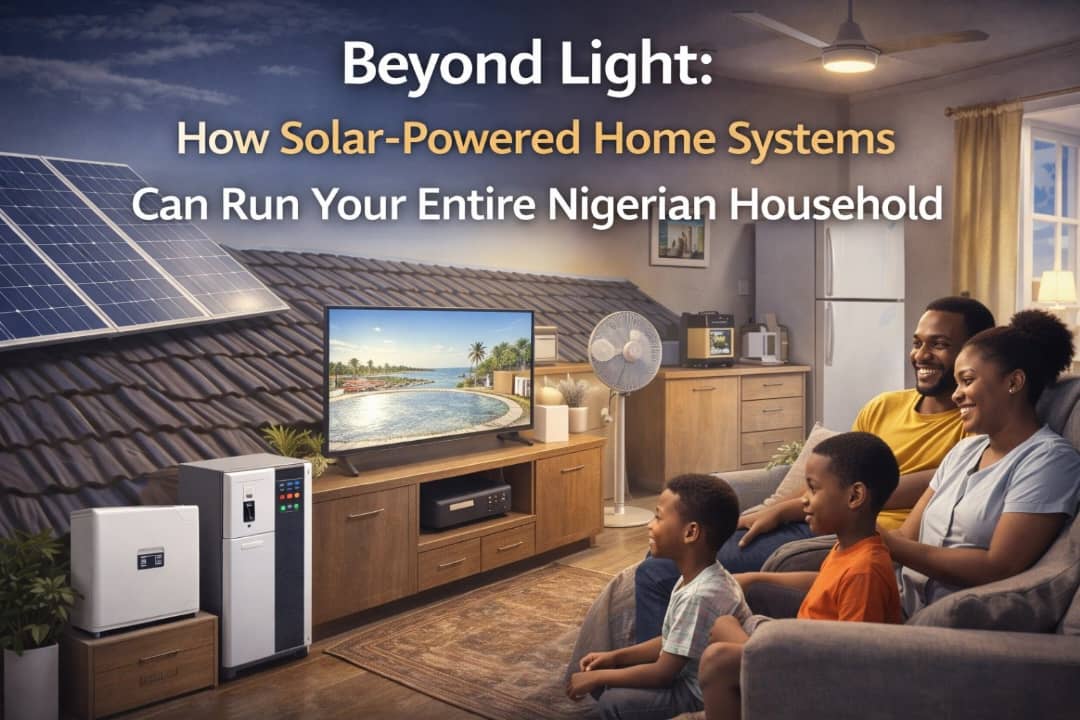
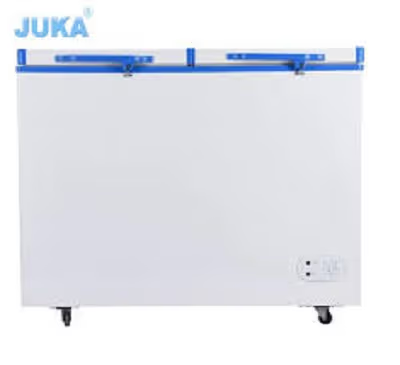
Discover how Solar-Powered Home Systems enable Nigerian homes to operate beyond lighting, powering fridges, TVs, and fans efficiently. For many Nigerians, reliable electricity feels like the ultimate luxury. Power outages, rising fuel costs, and unstable supply have turned energy into a daily struggle. But solar power today is no longer limited to charging phones or lighting a few bulbs. Modern solar systems are now capable of powering entire households, from refrigerators and freezers to TVs, fans, and even washing machines.
This guide moves beyond basic solar lamps to explain how integrated solar home systems work, what they realistically cost, and how Nigerian households can transition to sustainable, long-term energy independence. We break down the technology, return on investment, and practical steps to help you reduce generator reliance and recurring electricity expenses for good.
Table of Contents
Solar-Powered Home Systems Myths Busted: “It Doesn’t Work in Rainy Season” and Other Misconceptions
One of the most common myths about solar power in Nigeria is that it becomes useless during the rainy season. In reality, solar panels generate electricity from daylight, not direct sunlight. Even on cloudy days, panels continue to produce power, which is stored in batteries for later use.
Another misconception is that solar systems are only suitable for rural areas. Today’s solar setups are designed for urban homes, estates, and apartments, with systems tailored to different household sizes and energy needs.
From Inverter to Full Solar: Understanding the Technology behind Solar-Powered Home Systems
Many Nigerian homes already use inverters as backup power solutions. While inverters store electricity, they still rely heavily on NEPA or generator charging. Full solar systems eliminate this dependency by combining solar panels, charge controllers, inverters, and batteries into a single ecosystem.
At the basic level, solar systems can support lighting and electronics. At advanced levels, they power refrigerators, freezers, fans, TVs, and more. Understanding where your home fits on this spectrum helps you choose the right system without overspending.
The Appliance Audit: How to Calculate Your Home’s Exact Power Needs
Before installing solar, the most important step is an appliance audit. This involves listing all the appliances you intend to power and noting their wattage and daily usage hours.
For example:
- Refrigerators and freezers run continuously
- TVs and fans run for specific hours
- High-load appliances like pressing irons or microwaves require careful planning
This audit determines the size of your inverter, battery capacity, and number of solar panels needed to keep your home running smoothly.
Real Cost Breakdown: Initial Investment vs. 3 Years of Fuel and NEPA Bills
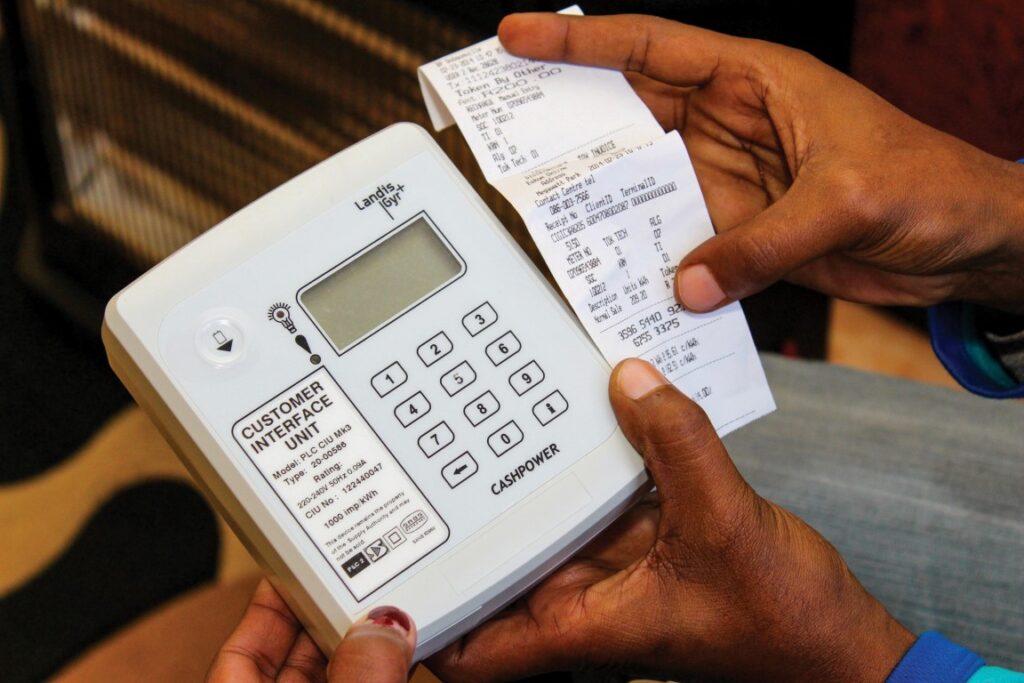
Solar requires upfront investment, but the long-term savings are significant. When compared to three years of generator fuel, servicing, oil changes, and rising electricity bills, solar often proves more cost-effective.
Many Nigerian households find that a properly sized solar system pays for itself within a few years while providing quieter, cleaner, and more reliable power throughout that period.
Case Study: A 3-Bedroom Bungalow in Enugu Powered 24/7
A typical three-bedroom bungalow in Enugu running a refrigerator, freezer, lighting, TVs, fans, and basic electronics can be powered entirely by a mid-sized solar system.
With a well-designed setup, the household enjoys uninterrupted power day and night, minimal generator use, and significantly lower monthly expenses. This real-life example shows that full-home solar is not theoretical, but already achievable for Nigerian families.
Choosing a Partner: How to Vet Solar Installers in Nigeria
Not all solar installers deliver the same quality. Choosing the right partner is critical to system performance and longevity.
Key questions to ask include:
- What appliances is the system designed to support
- Are components original and properly rated
- Is installation and after-sales support included
- What warranty covers panels, batteries, and inverters
A reputable installer will provide clear answers, proper documentation, and realistic performance expectations.
Government Grants and Payment Plans: Making Solar More Accessible
Solar adoption in Nigeria is becoming more accessible through flexible payment plans and emerging financing options. Some installers offer phased installations, while others partner with financial institutions to spread costs over time.
While government incentives may vary by location, staying informed about available programs can reduce the financial burden of switching to solar.
Maintenance 101: Simple DIY Panel Care for Longevity
Solar systems require minimal maintenance compared to generators. Regular cleaning of panels, ensuring cables remain intact, and keeping batteries well-ventilated are usually sufficient.
With basic care, solar panels can last over 20 years, making them one of the most durable energy investments available to Nigerian households.
The Kara Curated Solar Starter Kits: From Essential to Whole-Home Systems
At Kara Nigeria, solar solutions are curated based on real Nigerian power needs. From essential backup systems for lighting and electronics to full-home solar kits capable of running multiple appliances, each setup is verified for performance, durability, and compatibility with local conditions.
These kits are designed to scale, allowing households to start small and expand as needs grow.
Final Thought
Solar power in Nigeria is no longer about surviving outages. It is about reclaiming control over your energy, reducing long-term costs, and enjoying consistent power without noise, fumes, or fuel stress. With the right system and trusted partners, solar can run your entire household and transform how you live.