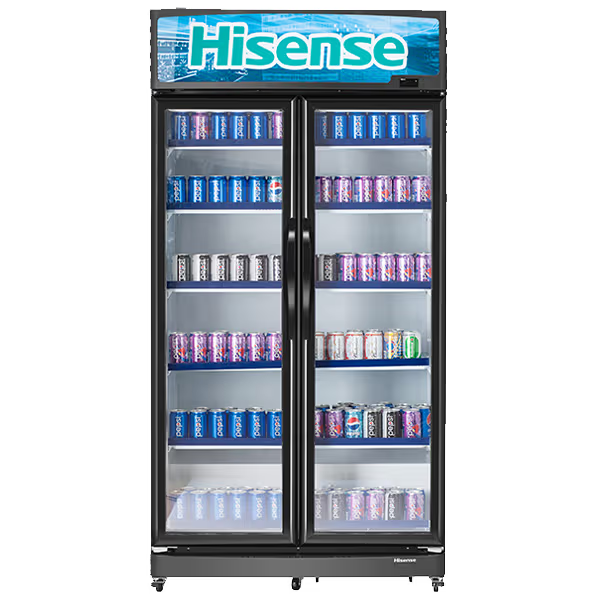
Running a Hisense Fridge on an inverter in Nigeria requires more than just plugging it into a backup power system. With unstable grid supply and frequent outages, many homes and businesses rely on solar or inverter setups — but not all refrigerators are equally compatible. Understanding startup surge, running wattage, and inverter capacity is essential to avoid overload trips and battery drain. Choosing the right configuration protects both your appliance and your power investment.
If you’re searching for how many watts a Hisense fridge uses on an inverter or the best inverter size for your refrigerator in Nigeria, this guide covers what truly matters. From low-voltage startup performance to inverter compressor technology, Hisense models are designed to handle Nigerian power conditions more efficiently than conventional fridges. Whether for home use, shops, or pharmacies, proper sizing ensures longer battery life and uninterrupted cooling. Here’s what you must know before buying or connecting your fridge.
Startup surge and running wattage.
Many Nigerians only check the “watts” written on the carton. That is a mistake. What actually shuts down inverters is the surge — the short burst of power needed to start the compressor.
The good news? Hisense fridges are known for Low Voltage Startup technology, making them far more compatible with Nigerian power realities compared to older conventional models.
Before you buy, here’s what you need to understand.
Wattage Comparison by Hisense Fridge Type
Different fridge sizes demand different inverter capacities. Below is a practical guide to help you choose correctly.
| Refrigerator Type | Average Running Watts | Estimated Startup Surge | Recommended Inverter Size |
| Table Top (45L – 90L) | 60W – 80W | 180W – 240W | 0.8kVA – 1kVA |
| Single Door (150L – 177L) | 70W – 130W | 250W – 400W | 1kVA – 1.5kVA |
| Double Door (200L – 300L) | 150W – 240W | 500W – 800W | 2kVA – 2.5kVA |
| Side-by-Side (500L+) | 250W – 450W | 900W – 1,500W | 3kVA – 3.5kVA |
These are realistic Nigerian operating estimates — not marketing numbers.
Why Startup Surge Is More Important Than Running Watts
When a refrigerator compressor starts, it can draw 3 to 5 times its normal running power for a few seconds.
For example:
A fridge that runs at 120W may briefly require 400W–600W just to start.
If your inverter cannot handle that surge, two things happen:
- The inverter trips into overload
- The compressor fails to start
- Repeated failure can damage both inverter and fridge
This is why matching inverter size correctly protects your investment.
Why Hisense Fridges Are Safer for Nigerian Power Conditions
Hisense models — especially newer ones available at Kara — are built with Nigerian voltage instability in mind.
1. Low Voltage Startup Capability
When NEPA voltage drops, many fridges struggle to kickstart. Hisense compressors are designed to operate within wider voltage ranges, reducing damage risk.
2. Built-in Voltage Stabilizer (on many models)
This reduces the need for external stabilizers in some cases and protects the compressor from fluctuations.
3. Inverter Compressor Technology (Select Models)
If you choose a Hisense model marked “Durable Inverter”, the compressor does not slam into full power instantly. Instead, it ramps up gradually.
This eliminates high startup surge — meaning you can often run a bigger fridge on a smaller inverter safely.
For inverter users in Nigeria, this is the smartest long-term option.
👉 Shop Hisense Inverter Refrigerators
Solar Users: The Sweet Spot for Small Businesses
If you run a small shop, pharmacy, or mini mart on 2 deep-cycle batteries, a Hisense Single Door model is usually the most efficient balance.
Here’s why:
- It consumes very little current once temperature stabilizes
- Thick insulation reduces compressor cycling
- Batteries last longer overnight
For many small Nigerian businesses, the 150L–177L category is the most cost-effective solution.
👉 View Hisense Single Door Refrigerators
How to Calculate Actual Power Consumption (Simple Formula)
Turn your fridge around and check the Rated Current (A) at the back.
Then use this formula:
Watts = Voltage × Current
In Nigeria, assume 220V.
For example:
If a Side-by-Side fridge is rated at 2.3A:
220V × 2.3A = approximately 506 Watts running power.
This tells you what your inverter must handle continuously — but remember, surge will be higher.
Always size your inverter above the calculated running load.
Smart Buying Tips for Inverter & Generator Users
If you use generator power during the day and inverter at night, here’s a practical strategy:
Pre-Cooling Method
While your generator is running, set the fridge to Super Cool mode. The insulation will retain cold for several hours, reducing compressor activity once you switch to inverter.
This is especially useful for:
- Frozen food sellers
- Pharmacy cold storage
- Small supermarkets
You can maintain cooling for up to 24–48 hours depending on door usage and model.
Protecting Your Refrigerator Investment
Even if your inverter is properly sized, additional protection helps extend lifespan.
For Nigerian conditions, consider:
Pure Sine Wave Inverters
They provide clean power similar to PHCN supply and protect compressor motors.
Deep Cycle Solar Batteries
Essential for longer cooling hours during outages.
Automatic Voltage Regulators (AVR)
Recommended especially for premium Double Door and Side-by-Side models.
Final Advice: Buy Based on Your Power Setup, Not Just Fridge Size
The biggest mistake Nigerian buyers make is choosing a refrigerator based only on storage capacity.
If you are running on inverter or solar:
- Check startup surge
- Check running wattage
- Match inverter size properly
- Consider inverter compressor models
- Plan battery capacity
Hisense Fridges remain one of the safest choices for unstable power environments — but correct sizing is key.
If you’re unsure which model fits your inverter capacity, chat with a Kara power specialist before purchasing.
A properly matched system will save you money, protect your inverter, and keep your goods safe — even during long outages.