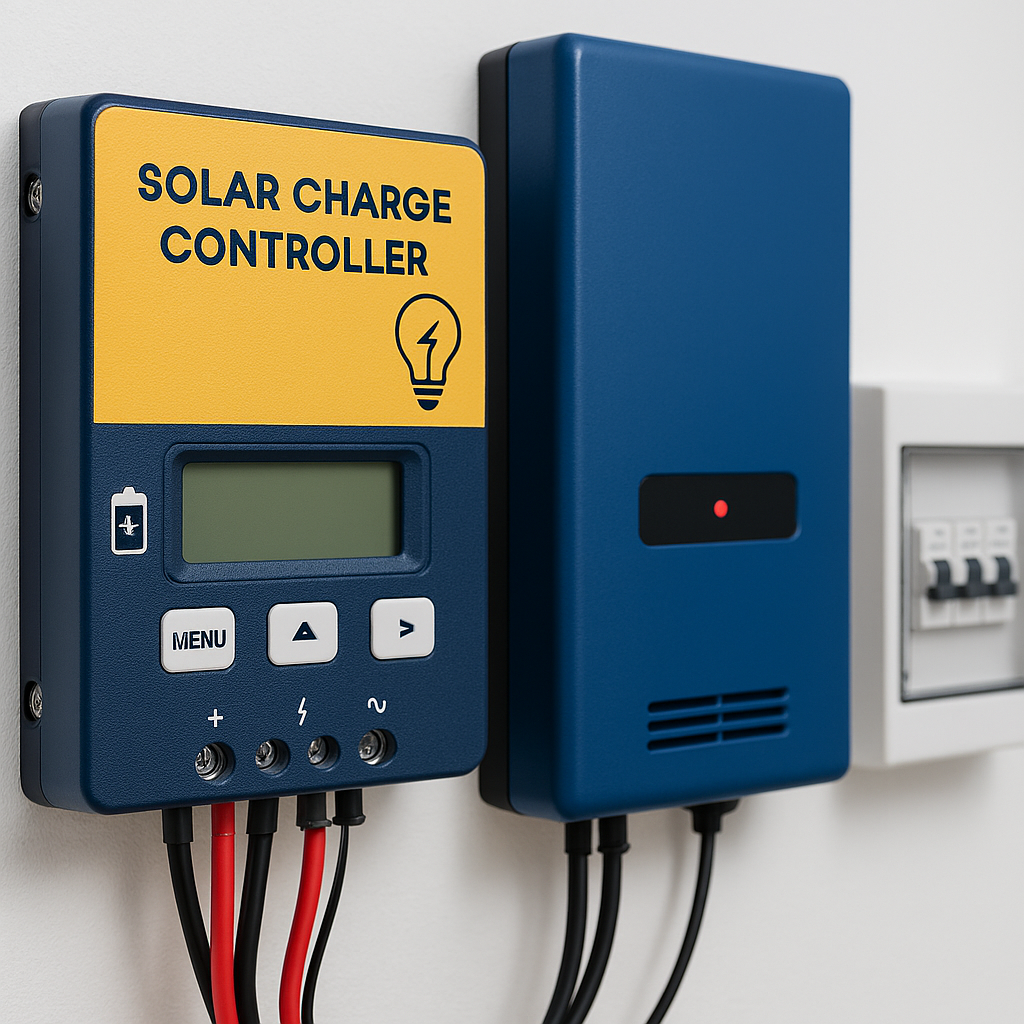
The Hidden Mistake That Can Wreck Your Solar Investment. Imagine spending hundreds of
thousands of naira or even millions of naira more on solar panels, batteries, and installation—only to watch the system fail within months. The culprit? A wrong solar charge controller. This is a small but critical device that is the “brain” of your solar setup, and choosing the wrong one can lead to catastrophic damage, wasted energy, and even fire hazards. If you’re planning a solar project in Nigeria for your home or office, this is the mistake you cannot afford to make.
Table of Contents
1. System Failure & Catastrophic Battery Damage
- Overcharging and Battery Destruction: An undersized or incompatible controller can overcharge batteries, causing gassing, overheating, and permanent battery death. Since batteries often account for 30–50% of your project cost, this is a financial disaster.
- Undercharging and Sulfation: Using the wrong settings (e.g., Flooded mode for AGM or Lithium) leads to chronic undercharging, sulfation, and reduced lifespan.
- Controller Self-Destruction: Exceeding maximum input voltage or current ratings can fry the controller instantly, halting your entire system.
2. Wasted Energy & Poor Performance
- Voltage Mismatch: A PWM controller paired with high-voltage panels can waste up to 60% of your solar power. For example, a 400W panel may deliver only 150W of usable energy.
- Incorrect MPPT Range: Even MPPT controllers fail if the array voltage doesn’t match the battery bank.
- Low Conversion Efficiency: Cheap controllers often run at 85% efficiency compared to 98% in quality models, turning valuable solar energy into heat instead of usable power.
3. Safety Hazards That Put Your Home at Risk
- Fire Risk: Overheating from poor design or overcurrent can cause melting wires and electrical fires.
- Missing Protections: Quality controllers include safeguards like reverse polarity, short circuit, and over-temperature protection. Cheap alternatives often skip these, leaving your system vulnerable.
- Arc Faults: Modern controllers with Arc Fault Circuit Interruption are essential for compliance and safety. Skipping this feature can fail inspections and increase fire risk.
4. Costly Incompatibility & Integration Problems
- Battery Communication Issues: Lithium batteries require controllers that communicate with their BMS via CAN bus or RS485. Without this, charging becomes unsafe.
- System Voltage Errors: A mismatch between your battery bank (12V, 24V, or 48V) and controller can cripple your system.
- Load Control Limitations: If you plan to run DC loads directly, a controller without
- programmable load terminals will ruin that part of your design.
5. Frustration, Downtime & Hidden Costs
- Project Delays: Discovering incompatibility mid-installation means halting work until a replacement arrives.
- Extra Expenses: You’ll pay for the wrong controller, the right one, damaged batteries, and shipping—all avoidable costs.
- Loss of Trust: For installers, using the wrong controller damages reputation and client confidence.
6. How to Choose the Right Solar Charge Controller in Nigeria
Follow this checklist before buying:
- Battery Chemistry Support: Confirm it supports Flooded, AGM, Gel, or LiFePO4
batteries with proper charging algorithms. - System Voltage Compatibility: Match the controller to your battery bank (12V, 24V, or 48V).
- Maximum Input Voltage (Voc): Ensure it exceeds your solar array’s maximum open circuit voltage, especially in cold weather.
- Current & Power Ratings: Controller amp rating must exceed your array’sshortcircuit current × 1.25.
PWM vs MPPT Rule:
- Use PWM only for small, matched systems (e.g., 12V panel with 12V battery).
- Use MPPT for larger systems, mismatched voltages, or when maximizing efficiency is critical.
Conclusion: Protect Your Solar Investment
In Nigeria’s growing solar market, the charge controller is the difference between a reliable,
long-lasting system and a costly failure. Think of it as the engine computer in a car—get it
wrong, and the whole system collapses. By investing in the right solar charge controller, you
safeguard your batteries, maximize efficiency, and ensure your solar project delivers power
for years to come.